Free trials available — no signup needed Try now →

ONE MAGAZINE

Telegram Non-Drop Member Panel: What It Means and How to Verify It
Social Media Growth Tips
May 19th, 2026 7 mins read

Telegram Non-Drop Member Panel: What It Means and How to Verify It

Telegram Non-Drop Member Panel: What It Means and How to Verify It

Ahmed T. · Operations Manager at OneSMM ·

On a platform with over 1 billion monthly active users, a Telegram non-drop member panel is an SMM service that guarantees delivered channel subscribers will remain subscribed, backed by an auto-refill warranty that replaces any members who leave within a specified period — typically 30 to 90 days. In practice, "non-drop" means initial drop rates below 5% in the first 30 days compared to 15-40% for economy services, achieved through higher-quality accounts with aged profiles and real activity signals. Non-drop services cost 2-4x more than economy tiers, ranging from $3 to $10 per 1,000 members, but the effective cost-per-retained-member is often lower when factoring in replacements and reorders.

"Non-drop Telegram members" is one of the most misused phrases in SMM panel listings. Every provider claims it. Very few deliver it without qualifications. Understanding what non-drop actually means — and how to hold a panel accountable to that claim — is the difference between a service that holds its value and one that requires constant maintenance.

This guide breaks down the technical reality of non-drop Telegram members, what to look for in service listings, and how to verify that a Telegram non-drop member panel actually delivers on its promise before you spend budget at scale.

What non-drop actually means

In theory, "non-drop" means the members delivered stay in your channel permanently and never leave. In practice, no SMM service can guarantee this with 100% certainty — because Telegram controls whether accounts remain active, and no provider can prevent Telegram from deactivating an account that joined your channel.

What "non-drop" realistically means in a quality panel listing:

  • Low initial drop — the delivered members have a significantly lower drop rate than economy services, typically under 5% in the first 30 days
  • Refill included — if members do leave, the provider replaces them at no additional cost within the warranty period
  • Higher-quality accounts — the accounts used are less likely to be flagged and removed by Telegram's own anti-spam systems

The honest definition: True non-drop does not exist. "Non-drop" in SMM context means "low drop rate with refill protection." A service listing that claims 0% drop with no refill warranty is making a claim it cannot back up. A service that offers a 30-day refill guarantee is making a provable, enforceable promise.

Why Telegram members drop after delivery

Understanding why drop happens helps you evaluate which non-drop claims are credible:

  • Telegram account purges — Telegram periodically removes inactive or low-quality accounts from its platform, as part of the anti-spam measures described in Telegram's FAQ. When an account used to join your channel gets deleted by Telegram, the member count drops.
  • Anti-spam detection — if Telegram identifies a batch of accounts as coordinated inauthentic behaviour, it may remove those accounts from channels they joined recently. With 2.5 million new users joining daily, Telegram actively monitors for spam patterns among new account registrations.
  • Manual leaves — some accounts are operated by real people running bulk operations. They may leave channels after a period if they clean up their join history.
  • Provider account recycling — lower-quality providers reuse the same accounts across many channel orders. When a channel using those accounts bans them or they become inactive, the count drops.

The first two causes (Telegram purges and anti-spam) affect even high-quality accounts occasionally. The last two (manual leaves and recycling) are provider-quality issues that non-drop and premium services minimise by using better account pools.

Non-drop vs auto-refill: the difference

These two terms appear in panel listings and are often confused:

Term What it means How it works What to check
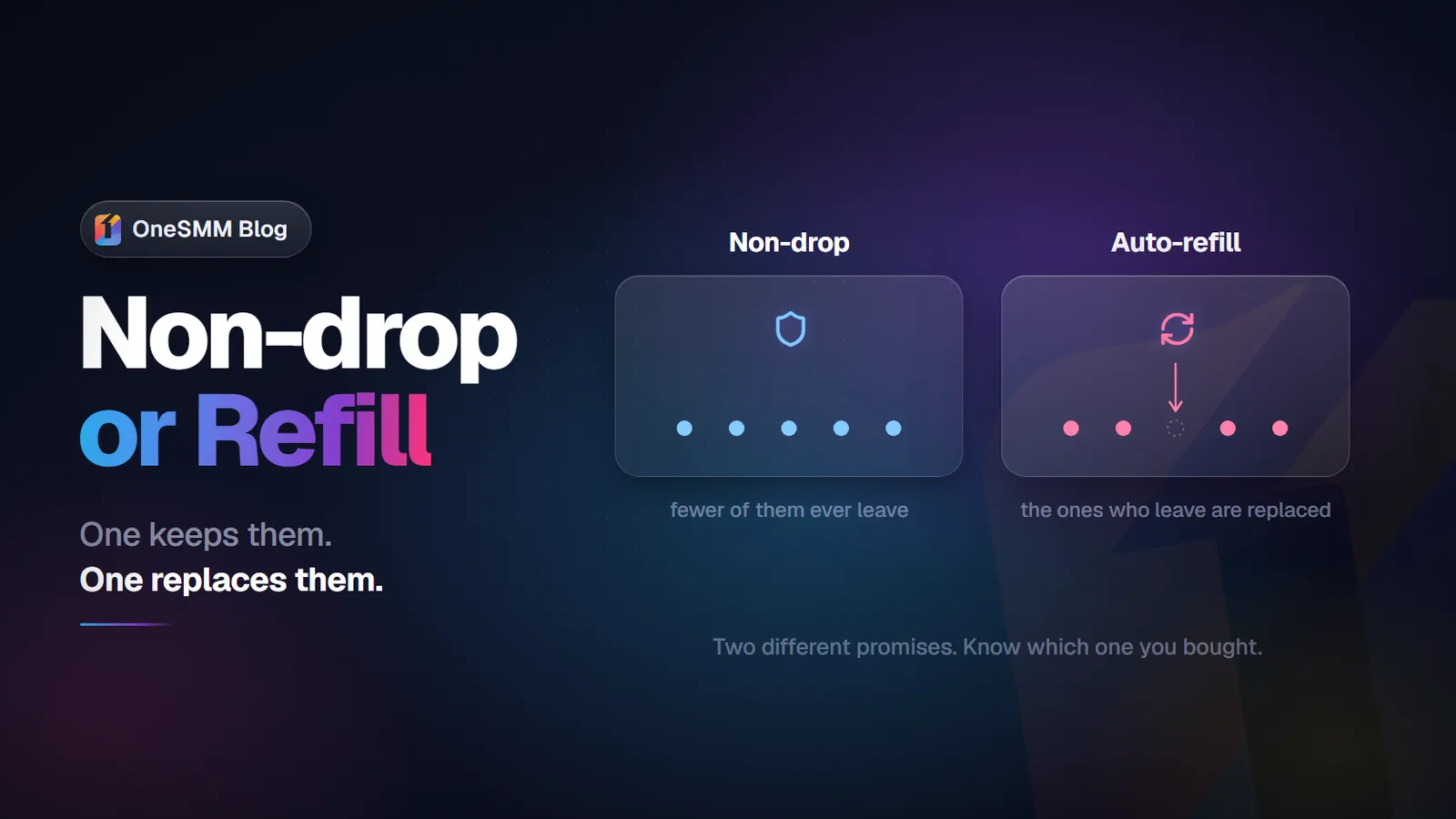
Non-drop Low inherent drop rate from high-quality accounts Members simply stay because account quality is higher Is there a refill warranty if it does drop?
Auto-refill Automatic top-up when count drops below delivered amount Provider monitors your channel and refills proactively How long is the warranty? 7, 14, or 30 days?
Manual refill Refill available on request within warranty period You submit a refill request when you notice the drop Is there a response time guarantee?
Drop-safe Marketing term — usually means refill-guaranteed Varies by provider Read the fine print for the warranty terms

The best services combine both: high-quality accounts (non-drop) with an auto-refill warranty as a backstop. You can read how drop protection works in practice in our guide on why Telegram members drop and how to build a stable audience.

How to verify a non-drop claim before large orders

Do not take "non-drop" at face value in a listing. Verify it with this process:

  1. Order 200–500 members from the service listed as non-drop
  2. Record the subscriber count when delivery completes — note the exact number
  3. Check at 48 hours — drop above 5% at 48 hours indicates the service is not genuinely low-drop
  4. Check at 7 days — quality non-drop services retain 95%+ at one week
  5. Check at 30 days — if a 30-day refill warranty is claimed, verify the count again near the end of that period
  6. If drop occurred and the service has refill — submit a refill request and measure how long it takes and whether the count is restored fully

This verification process costs very little (a small test order) and gives you data to make a confident scaling decision. The same logic applies when evaluating any new panel for the first time, as covered in our guide on testing SMM services before committing to large orders.

When non-drop members are worth the extra cost

Non-drop services typically cost 20–50% more than economy services. That premium is worth paying in these situations:

  • Established channels with an existing audience — a visible drop in subscriber count on a channel that has been stable for months is noticed by real subscribers and can damage credibility.
  • Client deliverables with ongoing monitoring — if a client is watching their subscriber count and will notice drops, the refill warranty protects your reputation as a reseller.
  • Channels with active post engagement — if your channel has real subscribers who engage with content, a high drop rate from economy members creates a skewed subscriber-to-view ratio that looks suspicious.
  • Long campaigns requiring stable counts over 30+ days — economy services need reordering. Non-drop with refill handles this automatically.

Economy services without refill are fine for new channels, short-term campaigns, and situations where drop is either irrelevant or acceptable. For everything else, the cost of non-drop is typically offset by the cost of reordering after drop occurs. For a full breakdown of how to evaluate the true cost, see our guide on cheap Telegram subscribers and the true cost calculation.

Frequently asked questions

How long does a non-drop Telegram members warranty typically last?

Most panels offer 7, 14, or 30 days. Thirty days is the standard for services marketed as drop-protected or non-drop with refill. Some providers offer lifetime refill on premium-tier orders, though this is less common and usually comes at a higher price point.

Does non-drop mean the members will engage with my posts?

No. Non-drop refers to count stability, not activity. Members from SMM services — whether economy or premium — do not open posts, react, or forward content in meaningful numbers. Post view counts are driven by your organic audience. If you need views alongside member count, order them separately from the Telegram services catalog.

Can I get a refill if my channel goes private mid-warranty?

Typically no. Delivery requires a public channel or valid invite link. If you make your channel private during the warranty period, the provider cannot deliver refill members. Keep the channel public or accessible via the same invite link throughout the warranty period.

What happens to my non-drop members if Telegram purges bot accounts?

If the accounts that joined your channel are caught in a Telegram-wide purge, they will leave — this is outside any panel's control. Reputable providers monitor this and handle mass purge events under their refill warranty. If you experience an unusual bulk drop unrelated to your order age, contact the panel's support with your order ID and the drop count.

Drop-protected Telegram members on OneSMM

OneSMM lists non-drop and drop-protected Telegram member services with 30-day auto-refill warranty. Economy, standard, gradual, and premium HQ tiers available. No admin rights required — invite link or username only.

View Telegram services →

Read More
Cheap Telegram Subscribers: How to Find Quality Without Overpaying
Social Media Growth Tips
May 19th, 2026 7 mins read

Cheap Telegram Subscribers: How to Find Quality Without Overpaying

Cheap Telegram Subscribers: How to Find Quality Without Overpaying

Ahmed T. · Operations Manager at OneSMM ·

Cheap Telegram subscribers are economy-tier channel members on a platform with over 1 billion monthly active users, available through SMM panels at rates between $0.50 and $2.00 per 1,000 — significantly below the $4-$10 per 1,000 range of premium services. The price gap reflects real differences in account age, profile completeness, and retention rates: economy subscribers typically show 15-30% drop within 30 days versus under 5% for premium tiers. However, cheap subscribers serve a legitimate purpose for new channels building initial social proof, test campaigns, and volume-focused growth where cost-per-member matters more than individual account quality.

Searching for cheap Telegram subscribers usually means one of two things: you have a tight budget and need volume, or you've been burned before by overpriced services with poor retention and want a better deal. Either way, the core challenge is the same — price and quality are not the same metric, and the cheapest option is not always the worst, but it's not automatically the best either.

This guide explains what drives price differences in Telegram subscriber services, how to find genuinely good value (not just a low number), and when cheap is the right call versus when spending slightly more saves money in the long run.

Why Telegram subscriber prices vary so much

Telegram subscriber pricing ranges from under $1 to over $10 per 1,000. The gap is not random — it reflects real differences in what you're getting:

Factor Economy ($1–$2/1K) Standard ($2–$4/1K) Premium ($4–$10/1K)
Account quality Minimal profile data Basic profiles, some history Aged accounts, real-looking
Delivery speed Very fast (hours) Moderate (hours–1 day) Gradual (days)
Drop risk Higher without refill Medium–low Low
Refill warranty Rare Often available (+cost) Usually included
Best for New channels, testing General growth campaigns Established channels, clients

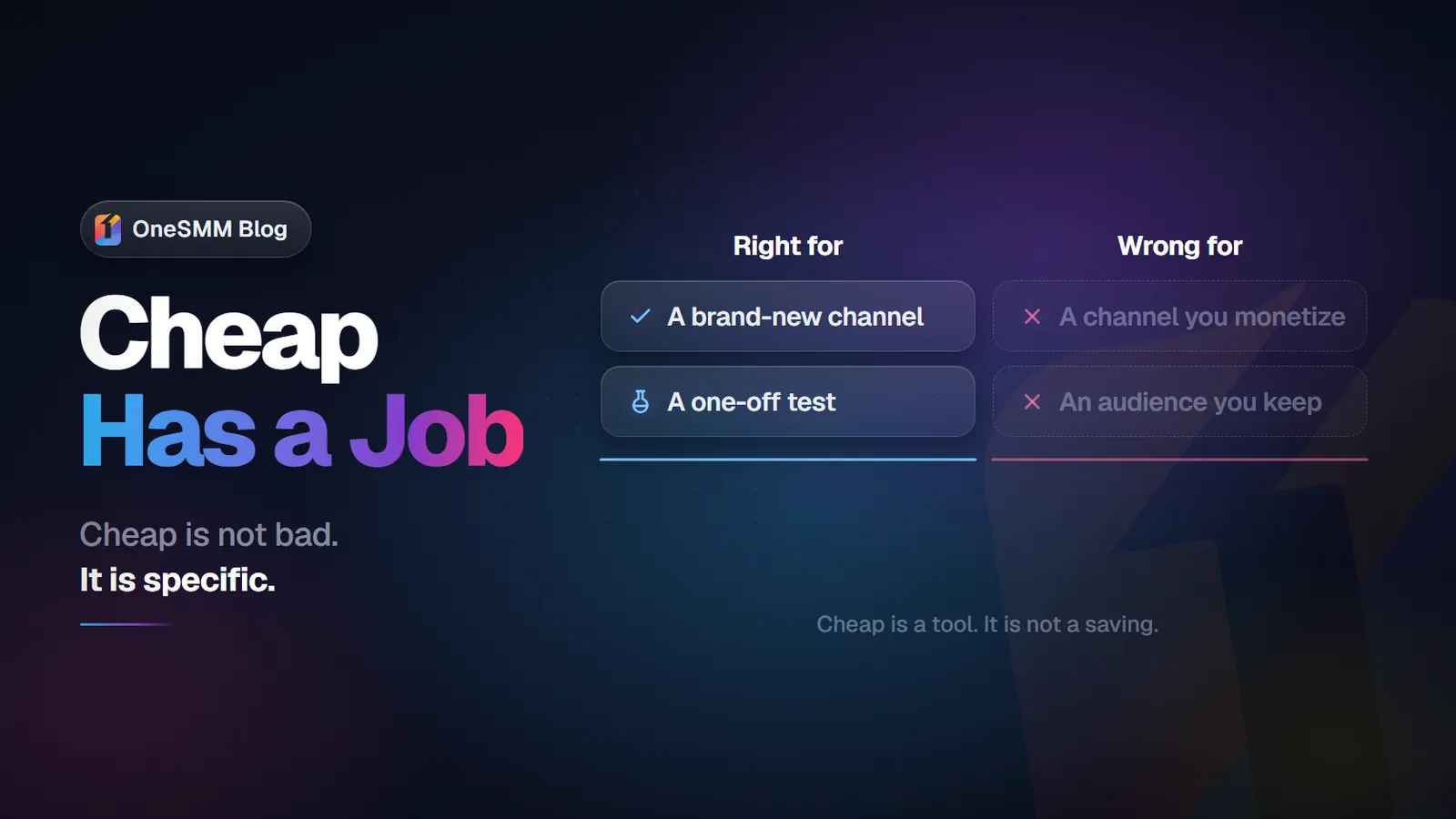
The economy tier is not inherently low quality. It's built for volume and speed — which is exactly what a new channel needs. The problem arises when people use economy services on established channels that need retention, not just count. For channels where stability matters more than price, a non-drop Telegram member service with a refill warranty is usually the better fit.

What cheap Telegram subscribers actually get you

cheap Telegram subscribers service delivers accounts that join your channel. These accounts are real Telegram accounts — they passed Telegram's phone-number-based registration. What varies is their activity level and how long they stay.

Economy-tier subscribers typically:

  • Join quickly and silently — no notification noise, no post interaction
  • May leave within 7–14 days at a rate of 5–20% without a refill warranty
  • Have minimal profile data (no photo, no username, no visible history)
  • Do not increase post views — subscriber count and view count are separate metrics on Telegram

The real value of cheap Telegram subscribers: They raise your channel's subscriber count, which changes how new organic visitors perceive the channel. A channel with 500 subscribers and one with 5,000 create very different first impressions — even when content quality is the same. That social proof effect is what you're paying for.

If you need post views to go up alongside subscriber count, that requires a separate service. The relationship between subscribers and views is covered in detail in our guide on optimising Telegram post reach.

The true cost calculation

Here's the comparison that most people skip when chasing the lowest price:

Scenario A — Economy service, no refill:
5,000 subscribers at $1.60/1K = $8.00
20% drop after 2 weeks = 1,000 subscribers lost
Reorder 1,000 to maintain count = $1.60 more
Total for 5,000 retained subscribers: $9.60

Scenario B — Drop-protected service with 30-day refill:
5,000 subscribers at $1.75/1K = $8.75
Drop covered automatically at no extra cost
Total for 5,000 retained subscribers: $8.75

The "cheaper" service cost more in the end. This calculation scales — on 50,000 subscriber orders, the difference is significant. This is why the cheapest per-unit price is often not the lowest total cost. The same principle applies to Telegram members as explained in our guide to cheap Telegram members at wholesale.

When cheap Telegram subscribers is the right call

Economy services are genuinely the right choice in these situations:

  • New channels with no subscriber history — any drop is invisible because there's no established baseline. Economy services build initial count efficiently.
  • Testing service quality on a new panel — start with 100–500 economy subscribers before committing to larger orders on an unfamiliar provider. Our guide on buying Telegram subscribers covers what to look for across different service tiers, and our breakdown of what "real" actually means in Telegram member services helps you evaluate quality claims.
  • Short-term campaign channels — if the channel is created for a specific campaign and won't be maintained long-term, retention is irrelevant.
  • Reseller cost testing — when evaluating a new panel as a reseller, economy orders let you test delivery speed and API reliability without spending much.

Economy services are the wrong call when:

  • Your channel already has an established audience who would notice a drop
  • You're delivering to clients who monitor analytics and report on subscriber trends
  • You need counts that hold stable for 30+ days without manual maintenance

How to test a cheap Telegram subscriber service before scaling

This five-step process protects your budget and tells you exactly what you're getting before committing to a large order:

  1. Order the minimum — most services allow 100–500 as a minimum. Order that amount first.
  2. Note the count before and after delivery — record the exact subscriber count when the order completes.
  3. Wait 48 hours — check the count again. Healthy retention is above 90% at 48 hours.
  4. Wait 7 days — check again. Economy services with genuine quality should retain 80%+ after one week.
  5. If retention is below 80% at 7 days — either switch to a drop-protected tier, or move to a different service on the same panel. Below 70% means the economy tier is not worth using for your use case.

This test approach works for any Telegram service — members, subscribers, or views. For a deeper look at why testing before large orders matters, see our guide on testing SMM services before paying for big orders.

Managing count after the order completes

Buying cheap subscribers is not a one-time fix if you're using an economy tier without refill. Once you understand the drop curve, you can build a simple maintenance system instead of constantly reacting to losses.

The drop curve for economy services typically looks like this:

  • Days 0–3: Count is stable at delivered amount. Telegram hasn't processed the new joins through its quality filters yet.
  • Days 4–14: First drop wave. Accounts with the thinnest profile data get caught in routine Telegram sweeps. Expect 5–15% loss depending on tier quality.
  • Days 15–30: Secondary drop. Slower, smaller losses as remaining accounts settle. Most quality economy services stabilise here.
  • 30 days+: Count is essentially stable unless Telegram runs a major enforcement event. Reorder if the count has dropped below your target threshold.

Two approaches to managing this:

  • Budget reorder approach — accept drop as a cost and reorder economy subscribers when the count falls below your target. Set a threshold (e.g., 500 below target) and reorder when you hit it. Works well when the per-unit economy price is low enough that reordering is still cheaper than paying for a drop-protected tier.
  • Drop-protected approach — pay slightly more upfront for a 30-day refill warranty. The panel automatically replaces lost subscribers during the warranty window. No monitoring required. More expensive per unit, cheaper in practice for high-value channels where count stability matters.

The decision between these approaches follows the same cost logic as the Scenario A vs Scenario B calculation above. If you're running a channel where the count needs to look stable consistently, the drop-protected approach wins on total cost. If you're running short-term campaigns or new channels where drop visibility is low, the budget reorder approach is fine.

Frequently asked questions

Is there a minimum safe price for Telegram subscribers?

There is no universal minimum that guarantees quality. Services under $1/1K are typically very high-drop without refill. Services in the $1.50–$2.50/1K range with a refill option tend to be the sweet spot for cost-effective campaigns. Anything over $5/1K should include clearly superior account quality or a strong retention guarantee.

Can I get free Telegram subscribers instead of buying them?

Yes — organic methods include posting in related Telegram groups, cross-promoting on other platforms, and using Telegram's own directory features. Free growth is slower but has better long-term retention because organic subscribers have genuine interest. Most successful channels use both: organic strategy for sustainable growth and SMM services for accelerating key milestones. Our guide on what actually works for Telegram growth in 2026 covers the full picture.

Do cheap Telegram subscribers interact with posts?

Generally, no. Economy subscribers are passive — they raise your count but do not open posts, react, or forward content. View counts remain driven by your organic audience. If you need both subscriber count and post views, order them as separate services. Telegram views services are listed alongside member services on the Telegram service page.

Does ordering cheap subscribers hurt my channel's organic reach?

No. Telegram channels are not algorithmic — as confirmed by Telegram's official FAQ, there's no feed that rewards or penalises content based on engagement ratios the way Instagram or TikTok do. Every subscriber receives your posts in their chat list regardless of whether they're organic or SMM-sourced. Adding economy subscribers does not suppress your organic reach or affect how Telegram distributes posts to existing members.

How do I know when to upgrade from economy to a drop-protected tier?

Two signals tell you to upgrade: (1) you've run a test order and seen more than 15% drop at 7 days on the economy tier — that service's quality isn't worth the reorder cycle even at the lower price; (2) your channel count has become visible enough that real subscribers would notice a fluctuation. The second signal usually kicks in around 5,000+ subscribers when organic members have formed a mental baseline for your channel's size.

Telegram subscriber services on OneSMM

OneSMM lists economy, standard, drop-protected, and gradual Telegram subscriber services starting from $1.45/1,000. Test with small orders, scale what works. No admin rights required — invite link or username only.

View Telegram services →

Read More
Telegram Community Building (Engagement & Growth Strategy)
Social Media Growth Tips
May 19th, 2026 7 mins read

Telegram Community Building (Engagement & Growth Strategy)

Telegram Community Building (Engagement & Growth Strategy)

Ahmed T. · Operations Manager at OneSMM ·

A Telegram community is a two-way discussion group — distinct from a broadcast channel — where members interact with each other and the admin, creating a self-sustaining engagement loop. On a platform with over 1 billion monthly active users, the potential audience for niche communities is substantial. Successful Telegram communities maintain a messages-per-member ratio above 0.5 per week and retain 60-80% of members over 90 days, compared to 30-50% retention for passive broadcast channels. Communities grow differently than channels: organic member-invite rates are 3-5x higher because active participants naturally share groups with peers, reducing the need for paid acquisition once the initial critical mass of 200-500 active members is established.

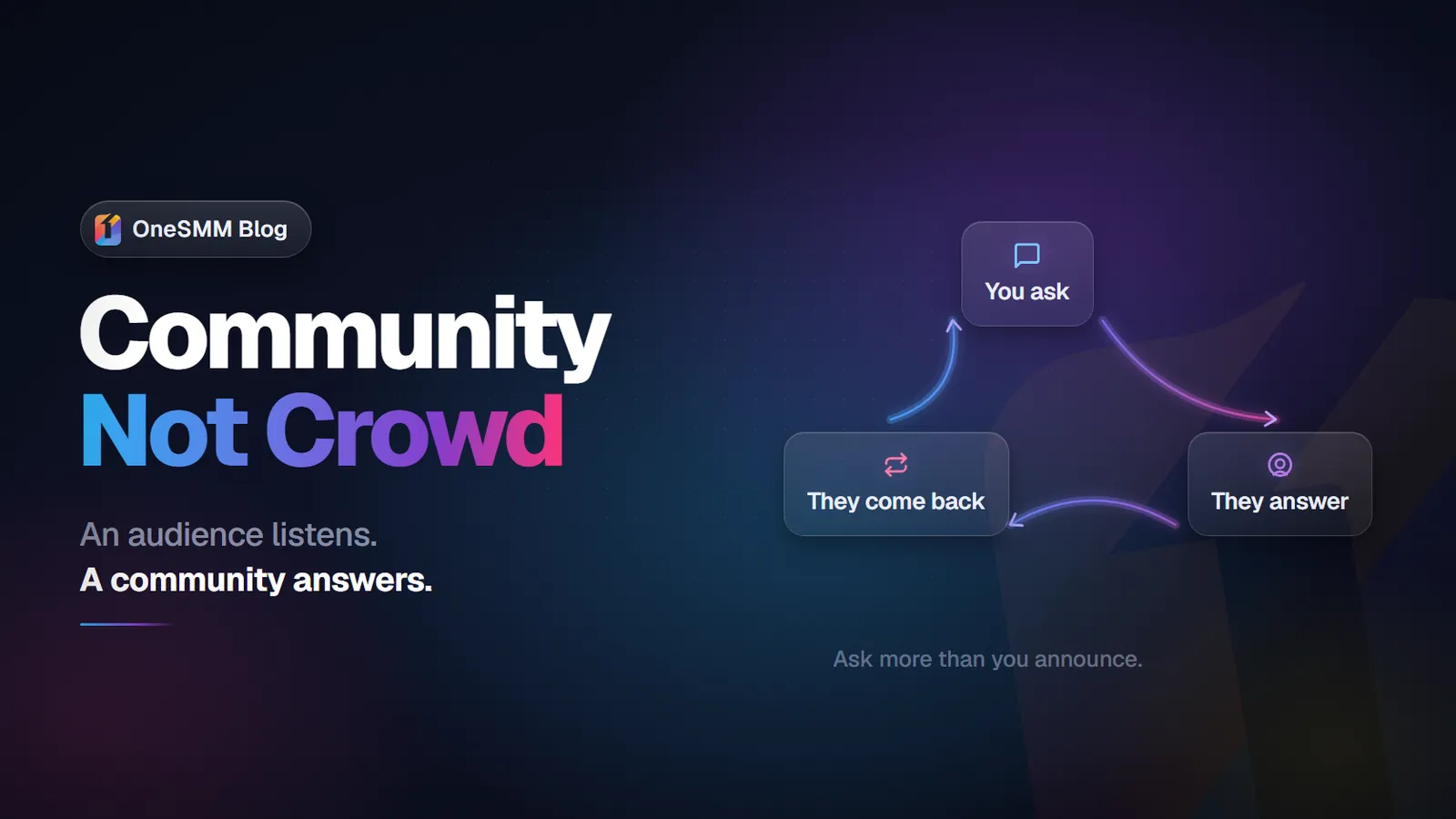
A Telegram community is different from a channel. Channels broadcast. Communities converse.

Growing a Telegram community isn't about blast reaching people. It's about attracting people who want to talk to each other. Most community builders get this wrong -- they treat the group like a channel and wonder why engagement is flat. The tactics that grow a broadcast channel actively hurt a community. If you are building a creator-led community specifically, our personal brand and creator guide covers the monetization side.

This guide covers how to build communities that grow organically through member engagement, the three community models that actually work, and how to structure your first 30 days so the community doesn't die quietly.

Community vs. Channel: The Critical Difference

Channel: You post. Members read. One-way communication.

Community: You and members discuss. Two-way conversation. Members talk to each other.

Why this matters for growth:

  • Channels grow through content quality and external promotion
  • Communities grow through member recommendations — word of mouth
  • A satisfied member says: "This community is amazing, come join us" — no channel can generate that kind of referral

With Telegram adding roughly 2.5 million new users per day, the pool of potential community members continues to expand. But the metric that signals a healthy community versus a dead group isn't member count. It's the percentage of members who post at least once per month. A 5,000-member community with 25% monthly participation is healthier — and grows faster — than a 50,000-member group where only 2% ever speak.

Types of Telegram Communities

Type Examples Growth Driver Monthly Growth Rate Retention
Interest-Based Coffee lovers, indie hackers, philosophy Shared passion 200–500 members Medium (passion fades)
Expertise-Based React developers, investment analysts Learning + sharing 300–800 members High (knowledge compounds)
Exclusive/Access Funded founders, $1M+ ARR operators Status + access 100–300 members Very High (peer value)

Type 1: Interest-Based Communities

People who share a passion find each other and want a place to discuss it. These communities grow steadily through organic discovery and recommendations. The challenge is sustaining engagement as the initial novelty fades — you need recurring rituals (weekly threads, monthly challenges) to keep the conversation active.

Type 2: Expertise Communities

Professionals sharing knowledge recruit their networks more aggressively than other community types. When a React developer finds a great React community, they share it with their team. This creates faster word-of-mouth growth and higher retention — people keep coming back because they keep learning. The best expertise communities assign roles: "designated experts" in specific sub-areas who are expected to answer questions there.

Type 3: Exclusive/Access Communities

Exclusivity creates the strongest retention and engagement of the three models. When membership requires a qualification (funded founder, verified operator, invited expert), members value access because not everyone has it. Growth is slower by design — you're curating, not accumulating. But members who get in become evangelists for the community, because being invited somewhere exclusive makes them feel seen.

The Community Growth Formula

Foundation: Clear Identity

Your community needs to answer immediately: "Who is this for?"

❌ "A community for ambitious people"

✅ "A community for SaaS founders who want to hit $100K ARR in their first year"

Specificity attracts the right people and repels the wrong ones. A community with the wrong members is harder to manage than a small community with the right ones.

Structure: Rules + Roles + Rituals

Rules: Minimal, but enforced. Three rules maximum: "Be respectful. No spam. Be authentic." Communities that over-moderate kill conversation. Communities with no standards become unusable noise.

Roles: Mods, helpers, topic leads, and veterans who guide the community culture. When members have a role, they feel ownership and participate more.

Rituals: These are the engine of engagement. Weekly threads ("What are you shipping this week?"), monthly calls, daily check-ins, expert AMAs. Regular interaction patterns give members a reason to show up even when they have nothing urgent to share.

Content: Questions Over Statements

Channel: "Here's my insight about X"

Community: "What's your biggest challenge with X? I'm seeing Y — curious what others are experiencing."

Questions drive conversation. Statements drive silence. Make it a rule in your own posts: never publish a standalone statement without a question attached.

Moderation: Light Touch, Clear Standards

Don't over-moderate — let the community self-organize. But enforce standards consistently: remove spam, remove hostility, and gently redirect off-topic content. Good communities self-police. Members call out bad behavior because they value the community. Your job is to back them up.

Your First 30 Days: Building the Foundation

The first 30 days determine whether a community lives or dies. Most communities lose 60–80% of their founding members in the first month because there's nothing drawing people back after the initial excitement.

Week 1: Focus exclusively on founding members (your first 50–100 people). Post daily questions. Welcome each new member individually. Establish the first ritual: a weekly thread with a recurring prompt.

Week 2: Identify the 5–10 most active members and make them informal helpers. Give them roles. Their participation signals to others that this is a real place worth engaging with.

Week 3: Host the first community event — a voice chat, a live AMA, or a group challenge. Events create shared experiences that bond members and give lurkers a reason to participate.

Week 4: Share the community publicly for the first time. You now have 30 days of activity to show that this isn't an empty group — it's a live community. This makes recruiting far easier.

Community Growth Strategies

Strategy 1: Founder-Led Growth

You actively participate — start conversations, answer questions, celebrate members. Requires 10–30 hours per week but builds the strongest culture. Members stay because they feel connected to you.

Strategy 2: Peer-Led Growth

Recruit 2–5 co-moderators who help facilitate conversations and welcome new members. You step back as the community matures. This scales better and creates a more resilient culture — the community doesn't depend on you being there every day.

Strategy 3: Content-Driven Growth

Publish original content (frameworks, research, guides) that attracts people who want to be around others who create and appreciate that content. Each piece of content is a permanent invitation to the community. Pairing a bot with your community can automate onboarding -- our bot user acquisition guide explains how to set that up.

Strategy 4: Event-Driven Growth

Host monthly or weekly events — calls, workshops, panels. Events give members reasons to stay engaged and give non-members a specific reason to join. Expect 50–200 new members per event if speakers and topics are well-chosen.

Measuring Community Health

Communities aren't measured just by member count. Track these:

  • Active participation rate: What % of members post or comment monthly? Target: 20–40%
  • Conversation quality: Are discussions thoughtful or just surface-level reactions?
  • Member-to-member interaction: Do members talk to each other, or only to you?
  • Member retention: What % stay active after 30 days? Target: 60%+
  • Organic referral rate: How many new members came from existing member recommendations?

Monetizing a Telegram Community

Communities monetize differently than channels. The audience is more engaged and more trusting, which means conversion rates are higher -- but the relationship is more fragile. Aggressive monetization destroys the culture faster in communities than in broadcast channels. For a full breakdown of how Telegram stacks up against other platforms on monetization, that comparison guide shows why Telegram communities earn more per member than most social profiles.

  • Premium tier: Paid sub-group with higher access (expert-only discussions, earlier announcements, 1-on-1 access to founder). $10-50/month. Telegram's own Premium subscription has proven users are willing to pay for enhanced Telegram experiences, with over 15 million paying subscribers as of 2025.
  • Event sponsorships: Companies pay to sponsor community events, Q&As, or monthly roundups. Non-intrusive if relevant to the community topic.
  • Job board: In expert communities, members are often hiring or looking for work. Charging for job posts ($50–200 each) creates recurring revenue without disrupting community culture.
  • Courses and cohorts: Communities built around learning convert well to paid cohort programs. Members who already trust you from the free community convert at 15–25%.

Common Community Mistakes

  • ❌ Not participating yourself after the launch period (members feel abandoned)
  • ❌ No clear purpose or identity (people don't know who it's for)
  • ❌ Over-moderating (kills organic conversation before it starts)
  • ❌ Allowing spam or low-quality posts (community quality degrades fast and is hard to recover)
  • ❌ No rituals or recurring structure (random conversation feels chaotic)
  • ❌ Not celebrating member wins (people feel invisible and stop contributing)

Timeline for Community Building

  • Month 1–2: Launch with clear purpose. 100–300 founding members. Focus on culture, not size.
  • Month 3–4: Establish rituals. 300–800 members. 20–30% active participation.
  • Month 5–6: Community self-organizes. 800–2000 members. Members recruiting friends.
  • Month 6–12: Maturity. 2000–10,000 members. 20–30% active. Strong peer culture.

When to Use Growth Services for Communities

Communities are more sensitive to growth services than channels because wrong members degrade the culture, and culture is harder to rebuild than subscriber count.

Only use growth services for communities when:

  • ✅ You have 5K+ active members and an established culture
  • ✅ The service can target your specific niche (not generic members)
  • ✅ You have enough existing members to absorb new ones without culture dilution
  • ✅ You want to accelerate, not manufacture, momentum you already have

Scale Your Community Responsibly

OneSMM can help communities grow when you have strong culture to absorb new members. Real, engaged members who fit your community's niche — not generic numbers that damage the conversation quality you've built.

Read More
Telegram for Personal Brands and Creators (Monetization Strategy)
Social Media Growth Tips
May 19th, 2026 7 mins read

Telegram for Personal Brands and Creators (Monetization Strategy)

Telegram for Personal Brands and Creators (Monetization Strategy)

If you're a creator, Telegram is your most valuable platform — not for vanity metrics, but for direct access to paying customers.

A YouTuber with 100K subscribers might make $2K/month from ads. A creator with 5K Telegram members can make $5K+/month by selling directly to them. The reason isn't magic. It's that Telegram members are opted-in to a direct relationship with you specifically — not with a platform algorithm that might show them your video or might not.

This guide covers how to pick the right niche, build personal brand authority on Telegram, and turn an audience into revenue across multiple streams.

Niche Selection: The Foundation That Everything Else Depends On

Most creator channels fail not because the content is bad, but because the niche is too broad to attract a committed audience. When everyone is your audience, no one feels the content is specifically for them.

The niche selection test: Can you describe your ideal member in one specific sentence?

❌ "I teach business and marketing tips"

✅ "I teach freelance designers how to get their first $5K/month client"

The narrower your niche, the faster you build authority, the higher your conversion rates, and the more you can charge. A "business coach" competes with thousands of channels. A "coach for bootstrapped SaaS founders trying to hit $10K MRR" has far less competition and commands a premium.

Good niche indicators: You have direct experience in it, there's a clear monetization angle, and the audience has recurring problems they actively pay to solve.

Why Telegram Is Best for Personal Brands

  • ✅ Direct relationship: Members chose to hear from YOU specifically, not from an algorithm
  • ✅ Direct sales: Sell courses, coaching, products directly with no middleman taking 30–50%
  • ✅ No algorithm risk: If YouTube changes recommendations, your Telegram members are still yours
  • ✅ Engaged audience: People who join your Telegram are fans, not casual followers who scrolled past
  • ✅ Higher lifetime value: Telegram members spend 5–10x more than casual social media followers

The Creator Monetization Model

Phase 1: Build on a free platform (Months 1–3)

Grow your audience on YouTube, TikTok, Twitter, or wherever you're comfortable. Build 1,000+ core fans who consistently consume your content. This proves your content works before you ask anyone for anything.

Phase 2: Launch Telegram (Months 4–6)

"Join my Telegram for exclusive content and early access to what I'm building." Move 10–20% of your audience to Telegram. You now have direct access to 100–200 people who specifically want more than your free public content.

Phase 3: Monetize (Month 7+)

Now that you have their attention and trust, introduce revenue streams. Start with the lowest-friction option (a premium tier) before launching higher-ticket products.

Monetization Streams by Audience Size

Audience SizeBest Revenue StreamRealistic Monthly RevenueConversion Rate
500–2,000 membersPremium tier ($10–20/mo)$500–$2,0005–10%
2,000–5,000 membersPremium tier + digital products$2,000–$6,0005–15%
5,000–15,000 membersCourses ($100–$500) + coaching$5,000–$15,0003–8%
15,000+ membersMulti-stream: course + premium + consulting$15,000–$50,000+2–5%

Content Strategy for Creator Telegram

The Mix (What to Post)

  • 50%: Valuable free content — tips, insights, frameworks, education
  • 30%: Behind-the-scenes — your process, thinking, updates, what you're building
  • 15%: Personal — life, failures, lessons learned, what you're reading
  • 5%: Promotional — offers, products, calls-to-action

This mix works because it earns attention before asking for money. When 95% of your content delivers value, the 5% promotion doesn't feel like an intrusion — it feels like an opportunity.

Content Formats That Work Best

  • Contrarian takes: "Everyone says X. Here's why that's wrong based on what I've seen." These get shared more than conventional wisdom posts.
  • Case studies: "Here's what one of my clients did and what happened." Specific stories convert better than general advice.
  • Progress updates: "Here's where I'm at with [project] this week." Transparency builds parasocial trust faster than polished content.
  • Questions: "What's your biggest challenge with [topic]?" Questions double as content and market research.

Posting Frequency for Creators

Recommended: 4–7 posts per week (roughly daily). Daily contact keeps you top-of-mind, makes it easier to justify a premium tier ("exclusive daily content"), and gives you more data on what resonates.

Growth Strategy for Creator Channels

Phase 1: Warm Launch (Months 1–2)

Invite your existing audience from other platforms — email list, YouTube community tab, Twitter. These people already trust you. Expected result: 500–2,000 early members. Focus entirely on delivering value. These early members become your word-of-mouth engine.

Phase 2: Growth Through Content (Months 3–4)

Create content so good that people recommend the channel. Share highlights on other platforms with a link to Telegram. Make posts screenshot-worthy. Ask directly: "Know someone who'd benefit from this? Share the link." Expected result: 2,000–5,000 members.

Phase 3: Monetization Launch (Months 5–6)

Launch premium content or products to your free audience. Start with a low-friction offer ($10–$20/month premium tier) before higher-ticket products. Expected conversion: 5–15% of free members. If you have 5,000 free members and 7% convert at $15/month, that's $5,250/month recurring.

Phase 4: Scale (Month 7+)

Grow the free audience while scaling monetization. Add multiple revenue streams (premium + courses + coaching). Use paid growth services to accelerate — now that the model is proven and you know your conversion rates, you can calculate exactly what a new member is worth.

Monetization Breakdown (Real Numbers)

Creator with 5,000 free Telegram members:

  • Premium tier: $10/month × 200 paying members = $2,000/month
  • Annual course: $300 × 50 buyers/year = $1,250/month average
  • Monthly coaching: $500/month × 2 clients = $1,000/month
  • Total: $4,250/month from 5,000 members

Compare to YouTube: 100K YouTube subscribers earns roughly $1–5K/month from AdSense. Telegram is 5–10x more valuable per follower when monetized directly.

How to Build Personal Brand Authority

1. Be Specific

❌ "I teach business growth"

✅ "I teach SaaS founders how to get their first 10 customers"

Specificity makes you memorable and shareable. Vague positioning creates vague results.

2. Show Your Work

Share what you're learning, building, and struggling with. Real transparency builds trust. People follow people they believe in, not perfect personas.

3. Have a Unique POV

Don't just repeat what others say. Add your perspective: "Here's what everyone says about [topic]. But here's what actually works based on my specific experience..." Disagreement and counterintuitive takes generate engagement faster than agreeing with conventional wisdom.

4. Engage With Your Community

Reply to comments. Answer questions. Do calls or AMAs. Your personal brand is built on relationship, not just content. Members who feel seen become promoters.

Common Creator Mistakes on Telegram

  • ❌ Starting monetization too early — before the audience trusts you
  • ❌ Only posting promotional content — no free value builds no trust
  • ❌ Inconsistent posting — sporadic content loses the habits you've built with your audience
  • ❌ Being too corporate or polished — people want the real you, not a brand persona
  • ❌ Not connecting with members — broadcasting only misses the relationship advantage Telegram gives you

Timeline to Revenue for Creators

  • Months 1–3: Building audience and trust. Revenue expectation: $0
  • Months 4–5: Launch first premium offer. Revenue: $0–$500/month
  • Months 6–9: Multiple revenue streams working. Revenue: $1,000–$3,000/month
  • Months 9–12: Scaled audience and model. Revenue: $3,000–$10,000+/month

Using Growth Services as a Creator

Once you have 5K+ members and a working monetization model, growth services become a calculated investment, not a leap of faith.

  • ✅ Cost per customer = (service cost per member) × conversion rate
  • ✅ If a member is worth $1/month and growth costs $2/member, you break even in 2 months
  • ✅ At month 3, every member added is pure margin

Example: 5,000 members paying $10/month average = $50K/month. Investing $5K/month in growth to add 5,000 more members doubles your revenue. The math works only after you know your conversion rate — that's why testing and tracking before scaling matters.

Scale Your Creator Audience

OneSMM helps creators accelerate their Telegram growth once the model is proven. Real members who become customers, not vanity metrics. Scale your personal brand faster with members who are actually interested in your niche.

Read More
Telegram Growth for News Channels (Daily Distribution Strategy)
Social Media Growth Tips
May 19th, 2026 7 mins read

Telegram Growth for News Channels (Daily Distribution Strategy)

Telegram Growth for News Channels (Daily Distribution Strategy)

Ahmed T. · Operations Manager at OneSMM ·

A Telegram news channel is a broadcast-only channel optimized for high-frequency content delivery — typically 5-20 posts per day — where the primary value proposition is speed and source credibility rather than community interaction. News channels on Telegram benefit from the platform's direct-delivery model: posts reach subscribers instantly without algorithmic filtering — with users opening the app an average of 21 times per day according to DemandSage — giving Telegram news outlets a structural speed advantage over Twitter/X and RSS-dependent readers. The largest niche news channels reach 100K-500K subscribers within 12-18 months, with initial growth accelerated through panel services at $1-$3 per 1,000 subscribers to establish the social proof threshold where organic cross-promotion becomes viable.

With over 1 billion monthly active users as of 2025, Telegram's audience pool is massive. But news channels on Telegram are special. They don't need engagement — they need distribution.

A news channel's value is: "Will you break news here first?" or "Can I trust this source?" That's a completely different value proposition than a community channel (which needs engagement) or a creator channel (which needs personality). For context on how news channels stack up, our Telegram vs other platforms comparison shows why Telegram's direct delivery model gives news outlets a structural advantage.

This guide covers the specific growth strategies for news channels — the three models, how to build a source discovery system that keeps you fast, monetization timelines, and how acceleration services fit into the picture.

Why News Channels Are Different

Regular channels: "Build a community. Engage with followers."

News channels: "Be the fastest and most trustworthy source."

Key differences that change how you grow:

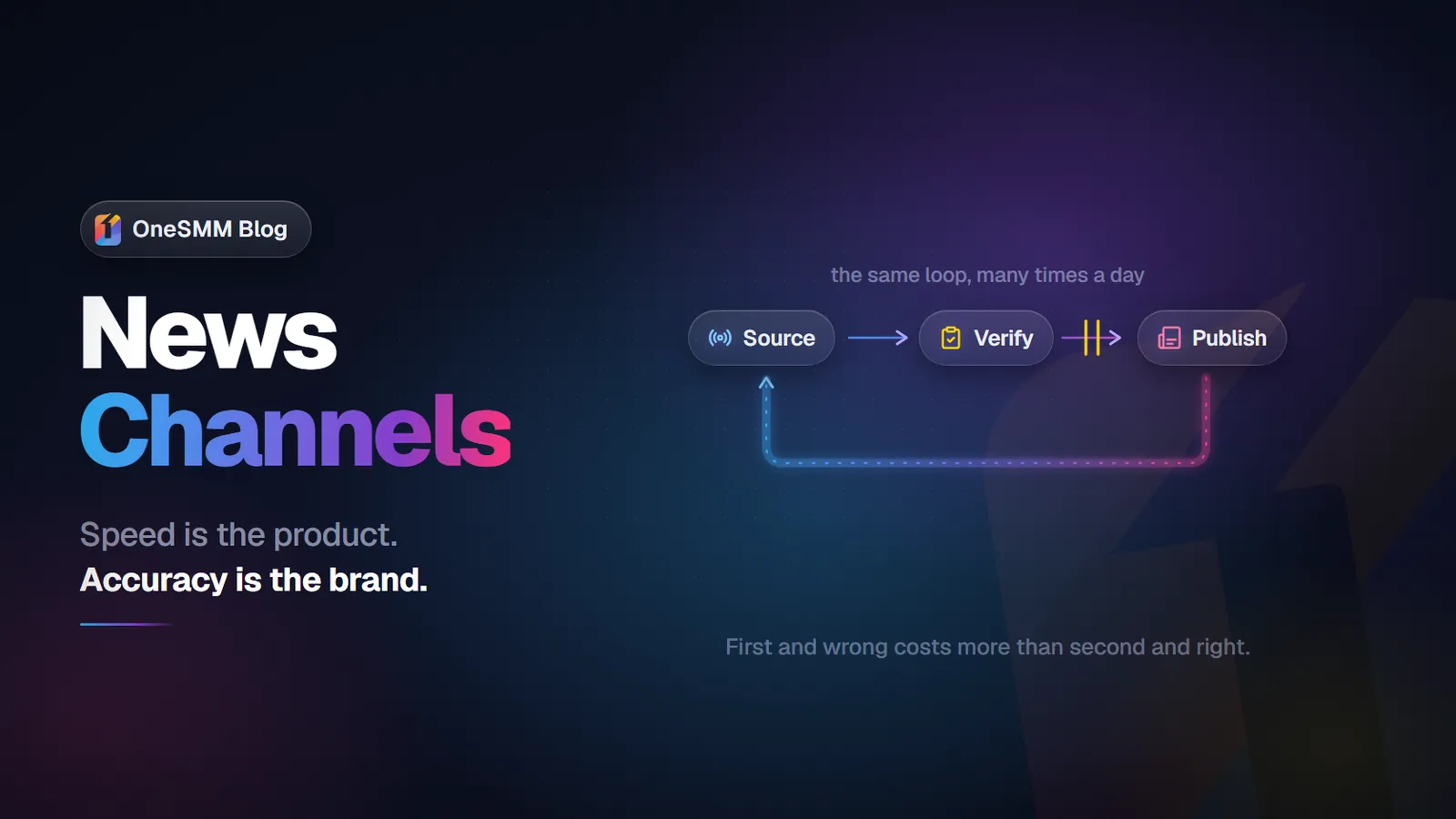
  • Speed matters more than polish. A fast, imperfect update beats a slow, perfect one in news.
  • Accuracy matters more than volume. One wrong story destroys months of credibility permanently.
  • Distribution network matters. Followers share news with others. Growth is primarily viral.
  • Consistency is critical. Users spend an average of 41 minutes per day on Telegram, and people expect updates at predictable times — inconsistency breaks the habit.
  • Engagement expectations are lower. A news channel can have 0.5% engagement and still be considered healthy.

The Three Types of News Channels

Type Posting Frequency Growth Timeline Monthly Members Key Challenge
Breaking News (General, Fast) 5–20 times/day 12–18 months 100–300 Competing with major outlets
Curated News (Filtered) 1–3 times/day 6–12 months 300–800 Maintaining curation quality
Commentary/Analysis 1–2 times/day 4–8 months 500–1,200 Building unique voice

Type 1: Breaking News (General, Fast)

Examples: Major news outlets, cryptocurrency/market news, tech industry news

Posting frequency: 5–20 times per day (whenever news breaks)

Growth challenge: You're competing with organizations that have 20+ full-time reporters. To win here, you need a niche within breaking news — not "all tech news" but "enterprise SaaS funding and acquisitions only." Niche breaking news channels can beat large outlets on specific topics.

Type 2: Curated News (Filtered, Analytical)

Examples: "The 5 most important AI stories today," "Crypto whale activity analysis," "Weekly market summary"

Posting frequency: 1–3 times per day at scheduled, consistent times

Growth advantage: Less competition than breaking news. Audiences value quality filtering over raw volume. People want someone to tell them which three stories out of fifty actually matter — and why.

Type 3: Commentary/Analysis (Opinion-Driven)

Examples: "Why this market move matters for your portfolio," "What this tech layoff signals for the industry"

Posting frequency: 1–2 long-form posts per day

Growth advantage: The fastest-growing news channel format. You build a loyal audience around your perspective, not just speed. People subscribe because they want to know how YOU see events — not just what happened. This creates defensible loyalty that pure news aggregators can't replicate.

Building a Source Discovery System

The difference between a news channel that breaks stories and one that reports them 2 hours late is almost entirely infrastructure. Manual browsing is too slow — you need automated monitoring:

  • RSS feeds: Subscribe to primary sources in your niche using a feed reader (Feedly, Inoreader). Configure alerts for keyword mentions. For crypto, subscribe to major exchange blogs, regulatory bodies, and key developer repositories.
  • Twitter/X lists: Create private lists of the 20–30 most reliable first-report accounts in your niche. These accounts often break news 15–30 minutes before it appears anywhere else.
  • Telegram monitoring: Join 10–15 channels that cover adjacent topics. News often surfaces in peer channels before it reaches mainstream publications.
  • Google Alerts: Set up keyword alerts for your niche's most important names, companies, and terms. Imperfect but catches anything that publishes to the open web.
  • Direct source relationships: The highest-quality news comes from primary sources — company PR contacts, regulatory filing notifications, official mailing lists. Build these relationships over time.

A news channel with good infrastructure catches stories 30–60 minutes faster than one relying on manual browsing. In competitive niches, that gap determines whether you break news or report it.

The News Channel Growth Formula

Step 1: Choose Your Niche

Too broad: "All tech news" — you'll lose to major outlets with 50+ reporters and unlimited budget.

Too narrow: "Python library releases" — not enough news to sustain daily content.

Just right: "AI startup funding news," "Crypto market movements," "Enterprise SaaS M&A activity"

Your niche should have daily news to cover, a specific audience who cares deeply about exactly that topic, and a meaningful difference from what competitors offer (faster, more curated, better analysis, different angle). Our guide on optimizing Telegram posts for reach covers formatting and timing tactics that help news updates get maximum visibility.

Step 2: Build Authority Through Accuracy

  • Verify before posting. One wrong story destroys months of credibility. Two wrong stories in a week destroys years.
  • Credit sources. "According to [Source]" or a direct link shows you're not making it up.
  • Update when wrong. Posting a follow-up correction actually builds trust — it signals you care about accuracy more than appearing infallible.
  • Break news fast. Being 30 minutes faster than competitors consistently is more powerful than any promotion strategy.

Step 3: Build a Distribution Network

  • Make it share-worthy. Each post should be quotable or interesting enough that readers forward it to relevant people in their network.
  • Partner with related channels. Cross-promotion with complementary news channels in adjacent niches brings 50–200 new members per collaboration.
  • Share to other platforms. Post breaking news to Twitter and LinkedIn with a link back to Telegram. Followers on those platforms discover your channel and migrate to it.
  • First-mover citations. When you break news that other channels later cover, you get mentions and links that drive discovery organically.

Step 4: Monetize Through Trust

News channel monetization is different from creator or community channels. The audience expects fast, accurate information — not a relationship with you personally. Monetization models that fit:

  • Premium tier: Analysis + early alerts + exclusive context that free members don't get. $5–$25/month. Works when your free content is clearly valuable and premium content is meaningfully better.
  • Sponsorships: Relevant companies pay to reach your specific audience. A crypto news channel reaches crypto investors — extremely valuable for exchanges, portfolio tools, and financial services.
  • Research reports: Deep analysis sold as one-time purchases ($50–$500). Particularly effective for financial and market-focused channels.
  • Consulting: For channels with strong track records, individual companies pay for access to your analysis and perspective.

Daily Workflow for News Channels

Morning (when you start): 15 min — Scan monitoring systems for overnight developments. Post 1–2 top stories with brief context.

Throughout the day: Every 2–3 hours — Check feeds and alerts. Post immediately when something major breaks. Speed matters more than polish on breaking news.

Evening: 15 min — Review the day, post summary or analysis. One opinion piece per day (your take on the most important story).

Total time: 1–2 hours per day for a curated news channel. Breaking news channels require more constant monitoring.

Growth Tactics for News Channels

Tactic 1: Be First and Fast

Set up your source monitoring system before focusing on anything else. If you're consistently 30 minutes faster than competitors, you'll attract the audience that values speed — and that audience recommends you aggressively.

Tactic 2: Cross-Promotion

Find 5–10 complementary news channels (same niche, different angle) and propose mutual weekly roundups. Expected result: 50–200 new members per cross-promotion. The best cross-promotions feel editorially genuine, not transactional.

Tactic 3: Twitter/Social Presence

Post breaking news to Twitter with a Telegram link: "Just posted: [Breaking news]. Full context on Telegram." Expected result: 5–20 new members per high-engagement post. Your Twitter presence is a permanent discovery funnel.

Tactic 4: Paid Acceleration (When Traction Is Proven)

Once you have 5K+ members and a demonstrated track record of accuracy and speed, paid growth can accelerate your subscriber base into ranges where organic discovery and editorial mentions take over. Expected result: 300–800 new members per month from targeted promotion.

Common News Channel Mistakes

  • ❌ Posting unverified news — one wrong story can destroy the channel
  • ❌ Being consistently late — 2 hours late on a story is as useful as 2 days late
  • ❌ Competing on volume when you're not a major outlet — you can't win the quantity game
  • ❌ No unique angle — subscribers need a reason to follow you specifically over Reuters
  • ❌ Inconsistent posting times — people expect news at predictable cadences

Growth Expectations for News Channels

With a unique angle and consistent execution:

  • Month 1–2: 500–1,000 members (early adopters and direct promotion)
  • Month 3–4: 1,500–3,000 members (reputation for accuracy builds organically)
  • Month 5–6: 3,000–8,000 members (established as a reliable source)
  • Month 6–12: 8,000–20,000 members (recognized as the go-to source in your niche)

If you're just aggregating existing outlets without differentiation: Growth will be slow and plateau early. Differentiation is the only sustainable path for news channels. If you also manage a business-focused Telegram channel, the B2B growth playbook applies to news outlets that monetize through sponsorships and premium tiers.

Ready to Scale Your News Channel?

OneSMM can help news channels accelerate growth once you've proven your angle and built an audience. Real members who follow for your content, not inflated numbers that undermine credibility.

Read More
Telegram Growth for Business Accounts (Strategy & Case Studies)
Social Media Growth Tips
May 19th, 2026 7 mins read

Telegram Growth for Business Accounts (Strategy & Case Studies)

Telegram Growth for Business Accounts (Strategy & Case Studies)

Ahmed T. · Operations Manager at OneSMM ·

A Telegram business channel is a company-operated broadcast channel or group used for direct customer communication, product updates, and community building — and it outperforms email marketing on two critical metrics: message open rates average 40-70% versus email's reported average of 40-43% (though roughly half of those "opens" are inflated by Apple Mail Privacy Protection auto-loading tracking pixels, per HubSpot's benchmarks), and response times are measured in minutes rather than hours. Businesses typically operate one of three models: a broadcast channel for one-way updates, a community group for two-way discussion, or a hybrid with both. Initial growth budgets for business channels range from $100-$500/month using panel services to establish social proof before driving traffic from existing customer bases.

Telegram isn't just for creators anymore. With over 1 billion monthly active users and $1.4 billion in revenue in 2024, the platform has matured into a serious business communication channel. Smart businesses are using it to build direct relationships with customers -- relationships that email marketing can't replicate and social media algorithms can disrupt at any time. If you are a solo creator rather than a company, our personal brand and creator monetization guide covers the individual-focused strategy instead.

A SaaS company uses Telegram to share product updates, get direct feedback, and build a loyal user base that stays engaged between purchases. An agency uses it to deliver insights and stay top-of-mind with clients. A startup uses it to build community around its product category before the product is even launched.

This guide covers how to grow Telegram specifically for business purposes — which model fits which business type, how to measure the actual business impact, and what the first 90 days look like.

Why Telegram for Business?

Unlike email marketing (where Apple Mail Privacy Protection inflates reported open rates, making the true engagement rate closer to 6-7% click-to-open) and social media (average organic reach: 3-7% of followers on Instagram), Telegram delivers messages to active, opted-in subscribers who chose to follow your company. The attention quality is fundamentally different.

  • High engagement: People who join your business Telegram actively want to hear from you
  • Direct monetization: Sell products and services directly to engaged subscribers
  • Community building: Create a user community that increases product loyalty and reduces churn (our community building playbook covers the engagement tactics in detail)
  • Feedback loop: Get real-time customer feedback faster than any survey or support ticket
  • No algorithm risk: Your messages reach subscribers regardless of platform policy changes

Telegram vs. Other Business Channels

Channel Average Open Rate Reach Risk Engagement Quality Two-Way Communication
Email newsletter 20–25% Low (inbox-based) Medium One-way
Twitter/X 0.5–3% of followers High (algorithm) Low Two-way
LinkedIn 1–5% of followers Medium (algorithm) Medium Two-way
Telegram 40–60% of subscribers Very Low (direct) High Two-way (groups)

Three Business Telegram Models

Model 1: The Newsletter Channel (SaaS, News, Analysis)

What it is: Daily or weekly content — tips, news, analysis, product insights

Best for: SaaS companies, newsletters, analysts, thought leaders

Content examples: "3 patterns our top users have in common," "This week's product updates and what they mean," "Startup funding news: what closed this week"

Monetization: Premium tier ($10-50/month), related products, sponsorships from relevant companies. Channels with 1,000+ subscribers also qualify for Telegram's 50% ad revenue share, paid out in Toncoin.

Growth trajectory: Months 1–3: 1K–5K members. Months 4–6: 5K–15K. Months 6–12: 15K–50K.

Model 2: The Community Channel (SaaS Users, Brands)

What it is: A place for customers to connect, share wins, and get support

Best for: SaaS companies, brands with passionate user bases, product-led businesses

Content examples: Company announcements, feature request threads, customer spotlights, Q&A sessions

Monetization: Higher product retention (community members churn 30–40% less), premium tier, recruitment/job board. If you are running a news-focused B2B channel, see our dedicated Telegram news channel growth strategy.

Growth trajectory: Months 1–3: 500–2K members. Months 4–6: 2K–10K. Months 6–12: 10K–30K.

Model 3: The Promotional Channel (Agencies, Services)

What it is: Updates about your services, case studies, and behind-the-scenes

Best for: Agencies, service providers, consultants, coaches

Content examples: Behind-the-scenes of client work, case studies with real numbers, exclusive early access to services

Monetization: Direct service sales, consulting retainers, referral partnerships

Growth trajectory: Months 1–3: 2K–5K members. Months 4–6: 5K–15K. Months 6–12: 15K–40K.

Business-Specific Growth Tactics

Tactic 1: Link in All Touchpoints

  • Website footer and homepage hero section
  • Email signature on all outgoing messages
  • LinkedIn company profile and employee profiles
  • Product documentation and help pages
  • Onboarding emails to new customers

Expected result: 5–20% of visitors who see the link will join. Passive but consistent.

Tactic 2: Incentivize Existing Customers

  • Email your customer list: "We launched a Telegram community for updates and direct support"
  • Offer a discount or bonus for joining (month of premium, feature unlock, consultation call)
  • Add in-product prompt: "Get faster support and early feature access on Telegram"

Expected result: 20–40% of your existing customer base will join if the value proposition is clear

Tactic 3: Content Cross-Posting

  • Write blog post → Post summary to Telegram → Cross-share on LinkedIn
  • Create a video → Post clips to Telegram → Link to full video
  • Run a survey → Share results first on Telegram → Then publish blog post

Expected result: 10–20 new members per piece of cross-posted content

Tactic 4: Strategic Partnerships

  • Find complementary companies (not competitors) targeting the same customer type
  • Propose cross-mentions in each other's channels
  • Co-host expert Q&A sessions that attract both audiences

Expected result: 50–300 new members per active partnership

Tactic 5: Make Joining Easy

  • QR code that opens Telegram directly — useful for in-person events, packaging, business cards
  • Clear value proposition in the link text: "Join our Telegram for weekly [specific benefit]" not just "Follow us on Telegram"
  • Landing page explaining what members get — treat Telegram like a product with a conversion page

How to Measure Business Impact

Most businesses track member count but miss the metrics that actually demonstrate ROI. Track these instead:

  • Conversion rate: What % of Telegram members became customers? Compare against other acquisition channels.
  • Retention impact: Do members churn at a lower rate than non-members? For SaaS, this alone can justify the channel's existence.
  • Support deflection: How many support tickets are resolved through Telegram community before reaching your support team?
  • Revenue attribution: Tag Telegram-sourced leads in your CRM. Calculate the pipeline value generated by the channel.
  • Engagement rate: Reactions and responses per post — proxy for content quality and audience relevance.

Your First 90 Days: Launch Framework

Days 1–30 (Foundation): Set up the channel, write the first 10 posts, send the invite to your email list and customer base, and establish a posting schedule. Don't promote externally yet — build the content foundation first.

Days 31–60 (Activation): Add Telegram links to your website, email signatures, and product. Launch the first exclusive offer for members only. Begin cross-posting content from the channel to other platforms.

Days 61–90 (Growth): Reach out to complementary businesses for cross-promotion. Begin tracking conversion and retention metrics. If engagement is healthy, start exploring paid member acquisition. Companies with bots as part of their offering should also review our bot user acquisition strategy for a complementary growth channel.

Real Case Study: SaaS Company

Company: Developer tools SaaS, 5,000 paying customers. Goal: Build community, get feedback, drive retention.

Month-by-month growth:

  • Month 1: 2,000 members (existing customers + email list invite)
  • Month 2: 3,500 members (word of mouth, in-product promotion)
  • Month 3: 5,000 members (reputation growing, organic discovery)
  • Month 4: 7,000 members (content went viral within niche)
  • Month 5: 9,000 members (partnership cross-promotions)
  • Month 6: 11,000 members (community momentum self-sustaining)

Measured business results:

  • Customer churn dropped 15% — members felt connected to the product
  • NPS improved 12 points — engaged community drives satisfaction
  • Product roadmap directly influenced by member feedback
  • 12% of expansion revenue attributed to members who upgraded after channel announcements

Common Business Telegram Mistakes

  • ❌ Making it a pure broadcast channel with no two-way engagement
  • ❌ Posting inconsistently — momentum dies after missed weeks
  • ❌ Making every post a sales pitch — subscribers leave
  • ❌ Not promoting the channel enough after launch — slow growth kills enthusiasm
  • ❌ Not engaging with member responses — they stop commenting when no one responds

When to Use Growth Services for Business

For business channels, the quality constraint is higher than for creator channels. Wrong followers won't engage or buy, and a dead-looking channel hurts brand credibility.

Use growth services for business when:

  • ✅ You already have 5K+ real members and a functioning content schedule
  • ✅ The service can target your specific audience niche (industry, role, interest)
  • ✅ You've proven the model — people join, stay, and convert
  • ✅ You want to accelerate growth 2–3x, not manufacture it from scratch

Scale Your Business Channel

OneSMM helps B2B channels and businesses grow with real, niche-targeted members. Accelerate your community building with quality growth that complements your existing customer acquisition strategy.

Read More
How to Grow Telegram Bot Users (Member Acquisition Strategy)
Social Media Growth Tips
May 19th, 2026 7 mins read

How to Grow Telegram Bot Users (Member Acquisition Strategy)

How to Grow Telegram Bot Users (Member Acquisition Strategy)

Telegram bots are different from regular channels. They're not broadcast-only. They're interactive tools.

This creates different growth challenges and opportunities. You can't grow a bot the same way you grow a channel. Discovery works differently, retention metrics are different, and the entire monetization model depends on whether users actually use the bot — not just whether they started it.

This guide covers the complete strategy: setting up your bot for growth, the five acquisition methods that work, how to retain users after they join, and when paid growth services make sense.

Before You Grow: Set Up Your Bot for Discoverability

Most bot creators jump straight to promotion before optimizing the basics. These elements determine whether users who find your bot understand it fast enough to stay:

  • Bot name and username: Should clearly describe the function. @CryptoTrackerBot ranks better in Telegram search than @CT_Bot_v2. Include the primary keyword users would search.
  • About description: BotFather allows a short description shown before users start. Write one sentence that says what the bot does and who it's for. "Track crypto prices and get alerts. Type /start to begin."
  • Commands menu: Set up your command list in BotFather. Users who see a clear command menu (/help, /start, /price, /alert) understand the bot faster and use it more.
  • Welcome message: The first message a user receives after /start is your only chance to explain the bot. Make it short, clear, and include the two or three most useful commands.
  • Profile photo: Bots with a recognizable icon look legitimate. Bots without a photo look abandoned or unfinished.

A bot that is confusing in the first 30 seconds loses most users before they experience any value. Optimize the onboarding before spending any effort on promotion.

Why Bots Are Hard to Grow

Regular channels: "Join for daily tips!" Easy to pitch.

Bots: "Use this tool!" Much harder to pitch without a clear use case.

The challenge: People use bots when they need a specific tool, not when they're casually browsing. This makes discovery harder. A channel subscriber might join out of curiosity. A bot user only starts the bot if they have a specific need it can meet right now.

The Five Ways to Grow Bot Users

MethodExpected Users/MonthEffortBest For
Embed in existing channel10–20% of channel sizeLow (one-time promo)Creators with existing audience
Solve a specific problem50–200 organicMedium (product quality)Utility bots with clear use case
Bot directories20–100Low (one-time submission)All bots; baseline visibility
Cross-promotion50–300 per partnershipMedium (outreach)Bots with complementary tools
Paid promotion100–500 per campaignLow (budget-driven)Proven bots with good retention

Method 1: Embed in Another Channel

If you own a channel with 1000+ members, promote your bot there. A single pinned post with "Try our bot: @YourBotName" is the highest-conversion promotion method available. Channel members already trust you. When you recommend the bot, the conversion rate is 10–20% — far higher than cold discovery through directories or ads.

Method 2: Solve a Specific Problem

Bots that solve a clear, searchable problem grow through word of mouth and organic discovery. A crypto price tracker, a grammar checker, a currency converter — users who find real value share it. They tell a colleague: "There's a bot for that." This growth is slower but produces users who actually use the bot regularly. Target one problem with one bot. Multi-purpose bots are harder to discover and harder to explain.

Method 3: Bot Directories

Submit your bot to Telegram bot directories — StoreBot, Telegram's internal bot recommendations, and third-party directories. These directories are browsed by people specifically looking for bots. Your listing quality matters: write a clear description, include relevant categories, and accumulate ratings. A bot with 50 ratings and a 4.5 average will outperform a bot with 500 users and no ratings in directory rankings.

Method 4: Cross-Promotion

Find bots that serve a complementary need and negotiate mutual recommendations. A scheduling bot and a reminders bot share the same user profile — people who want automated task management. Cross-recommendation inside the bot itself ("Check out @RelatedBot for X") has a 5–15% click-through rate because users are already engaged with an automated service when they see the recommendation.

Method 5: Paid Promotion

Pay to advertise in channels or groups where your target users spend time. A developer tools bot should advertise in programming channels, not general growth channels. Cost-per-start ranges from $0.50–$5.00 depending on how targeted the audience is. Confirm the promotion converts before scaling — 100 users from a targeted channel is more valuable than 500 from an untargeted one.

Bot Retention: Keeping Users Engaged After They Join

Acquisition brings users in. Retention determines whether your user count grows or leaks. Most bots lose 60–80% of new users within the first week because the value isn't immediately clear or the bot isn't used regularly enough to become habitual.

Tactics that improve bot retention:

  • Scheduled interactions: Bots that push useful messages at predictable times (daily price reports, weekly summaries) become habits. Users who receive value without asking for it stay engaged.
  • Onboarding flow: Walk new users through the most important command on their first session. Don't assume they'll read a manual — guide them.
  • Feedback prompt: After 7 days, send a simple "Is this bot helping you?" message. Users who respond are your most loyal segment. Their feedback tells you what to improve.
  • Feature announcements: When you add a new capability, tell existing users. It restarts the discovery process for people who had stopped using the bot.
  • Deep linking: Create shareable links that open the bot with a specific command pre-filled (t.me/YourBot?start=command). These links make it easier for current users to share the bot with a specific use case already set up.

The Bot Growth Formula

Most important factors:

  1. Usefulness: Does your bot actually solve a problem? Not optional.
  2. User experience: Is it easy to use? Can someone figure it out in 10 seconds?
  3. Discoverability: Can people find it? (directory listings, recommendations, search)
  4. Viral coefficient: Do users tell their friends about it?

Without #1 and #2, #3 and #4 don't matter. You can drive 1000 users but if the bot disappoints, none stay.

Measuring Bot Success

Track different metrics than you'd track for a channel:

  • New users/month: How many new people start using it?
  • Active users/month: How many use it at least once monthly?
  • Daily active users: How many use it every day?
  • Churn rate: How many stop using it after 30 days?
  • Feature adoption: Which commands do people use most?

Healthy bot metrics:

  • 30–50% of people who start using it stay active after 30 days
  • 10–20% use it at least 3 times per week
  • Churn rate under 5% per week after the first two weeks

Common Bot Growth Mistakes

  • ❌ Launching a bot nobody asked for (validate demand before building)
  • ❌ Making it so complicated users give up (simplify to one core command first)
  • ❌ Not writing clear instructions (users don't figure it out themselves)
  • ❌ Changing core functionality without warning (users get confused and leave)
  • ❌ No feedback mechanism (you can't improve what you don't measure)
  • ❌ No scheduled messages (bots that only respond, never initiate, get forgotten)

Bot Growth Timeline

  • Month 1–2: 10–50 users (friends, testing, first directory listings)
  • Month 3–4: 50–200 users (early traction, word of mouth)
  • Month 5–6: 200–500 users (directories, cross-promotions active)
  • Month 6–12: 500–2000+ users (reputation compounds)

This assumes: Good product, consistent improvement, and some promotion effort.

When to Use Paid Growth for Bots

Growing a bot with paid services is more nuanced than growing a channel because:

  • Not all new users will actually USE the bot
  • Growth services add users who might not need your specific tool
  • 100 active users are worth more than 1000 who never return

Use paid growth only when:

  • ✅ Your bot has 100+ organic users with good retention (proof it works)
  • ✅ You've validated demand (people are actively looking for this type of bot)
  • ✅ You're paying to accelerate proven traction, not to manufacture demand

Bot vs. Channel Strategy

Channels: Growth → Engagement → Monetization (sell to loyal audience)

Bots: Useful tool → User base → Monetization through premium features, API access, or advertising

These are different business models. A channel builds an audience around content. A bot builds users around utility. The growth tactics differ, the retention metrics differ, and the revenue models differ. Don't confuse them — optimize each for what it actually is.

Growing a Bot Community?

If you have a bot that serves a specific user base and want to accelerate user acquisition, OneSMM's targeted growth services can help you reach the right audience. Real users who actually need your tool.

Read More
How to Optimize Telegram Posts for Maximum Reach (2026 Algorithm)
Social Media Growth Tips
May 19th, 2026 7 mins read

How to Optimize Telegram Posts for Maximum Reach (2026 Algorithm)

How to Optimize Telegram Posts for Maximum Reach (2026 Algorithm)

Ahmed T. · Operations Manager at OneSMM ·

Telegram post reach optimization is the practice of structuring, timing, and formatting channel posts to maximize the percentage of subscribers who actually see and engage with each message. Unlike Instagram, where organic reach averages just 3.5%, Telegram delivers posts directly to all subscribers — but it does prioritize notification delivery and channel positioning based on member interaction patterns. Channels with consistent 30%+ view rates appear higher in subscriber chat lists. In 2026, optimized channels report 2-4x higher per-post views than unoptimized channels of the same size, with the biggest gains coming from posting time, format variety, and reaction usage.

You post regularly. Your content is solid. But reach feels flat. Same 100-200 views per post, even though you have 5000 members.

Here's the problem: You're not optimizing for how Telegram's delivery system actually works.

Telegram doesn't promote or suppress posts like Instagram or TikTok. With over 500 million daily active users opening the app an average of 21 times per day, your posts compete for attention in a busy chat list. Telegram DOES have signals that determine how prominently your post appears in members' notification feeds. The difference is subtle but powerful.

This guide reveals the actual factors that drive reach on Telegram—and how to optimize every post for maximum visibility. If your channel growth has stalled entirely, first diagnose the root cause with our guide to why Telegram channels stop growing.

How Telegram's Post Visibility Works (The Real Mechanism)

First, let's clarify what Telegram doesn't do:

  • ❌ It doesn't have a "feed algorithm" that ranks posts
  • ❌ It doesn't boost posts based on early engagement
  • ❌ It doesn't suppress content from posts with low likes (unlike Instagram)

What Telegram DOES have:

  • ✅ Notification priority (does your post push to their phone?)
  • ✅ Channel positioning (where does your post appear in the list?)
  • ✅ Search visibility (will your post show up when people search your niche?)
  • ✅ Recommended channels (does Telegram suggest you to new members?)

These factors don't directly affect reach for your existing members (they all see your posts). But they affect:

  • Whether your post reaches all your members or just some
  • How quickly it appears in their feeds
  • Whether former members see your post when checking back
  • Whether potential new members discover you

The Five Factors That Drive Telegram Post Reach

Factor 1: Engagement Velocity (The First 2 Hours)

What it is: How quickly your post gets interactions in the first 2 hours after posting.

How it works:

  • You post at 9am
  • By 11am, you have 50 comments and 100 reactions
  • Telegram's system sees "this post is resonating fast"
  • It pushes the post higher in feeds and keeps it visible longer

What you can control:

  • Post timing (afternoon/evening gets faster engagement)
  • Post format (questions get more comments than statements)
  • Call-to-action (explicitly asking for engagement works)

Real impact: Posts with 5%+ engagement in first 2 hours show 20-40% more reach than posts with 1% engagement in that window.

Factor 2: Content Type (What You're Posting)

Telegram prioritizes certain content types:

  • Text posts: High reach. Telegram's native format.
  • Images with text: High reach. Visual engagement is strong.
  • Video/GIFs: Very high reach. Video drives more engagement.
  • Links: Lower reach. Telegram deprioritizes external link spam.
  • Forwarded posts: Lowest reach. Telegram wants original content.

Real impact: A video post from your account gets 2-3x more visibility than a forwarded news article.

Factor 3: Channel Health (Engagement Rate Over Time)

What it is: Your average engagement rate over the last 30 days.

How it works:

  • Channels with consistent 2-3% engagement = high "health score"
  • These channels get more prominent post placement
  • Channels with low engagement get less visibility

What you can control:

  • Post quality (better content = more engagement)
  • Posting frequency (consistent posting maintains health score)
  • Community engagement (responding to comments signals health)

Real impact: This factor compounds. A healthy channel's reach grows over time as Telegram recognizes the pattern. Conversely, buying Telegram post views can give a new post the initial velocity it needs when organic engagement is still building. Building a base of Telegram followers also increases the pool of subscribers who receive your posts in their chat list, even if not all of them open every message.

Factor 4: Member Geography & Activity

What it is: Where your members are and how active they are in Telegram overall.

How it works:

  • If your members are mostly active Telegram users (posting, joining groups, engaging), your posts get more reach
  • If your members are mostly inactive (just lurking), reach is lower
  • Time zones matter. Telegram shows posts to timezone-relevant members first

What you can control:

  • Post timing (post when your geographically largest member group is active)
  • Content relevance (attract active community members, not passive lurkers)

Real impact: Posting at 9pm UTC reaches members in Europe/Africa better. Posting at 8am UTC reaches Asia/Australia better. Same content, 40% difference in reach depending on timing.

Factor 5: Topic Relevance (Hashtags & Keywords)

What it is: Whether your post uses Telegram's search/discovery keywords effectively.

How it works:

  • Your post about "React best practices" with hashtag #ReactJS gets searchable
  • People searching #ReactJS see your post in results
  • This drives discovery for new members

What you can control:

  • Hashtag strategy (2-3 relevant hashtags per post)
  • Post title/opening (include searchable keywords naturally)
  • Content specificity (specific topics rank better than vague ones)

Real impact: Posts with strategic hashtags get 20-30% more discovery reach from non-followers.

The Reach Optimization Checklist (Apply to Every Post)

Before posting:

  • [ ] Is this content original or forwarded? (Original = more reach)
  • [ ] Does it include visual elements? (Image or video = higher reach)
  • [ ] Does it end with a question or CTA? (Engagement driver)
  • [ ] Have I included 2-3 relevant hashtags? (Discovery enabler)
  • [ ] Does the opening hook immediately? (Fast engagement = boost)

Timing:

  • [ ] Is this posted during my audience's active hours?
  • [ ] Have I checked analytics to know when my members engage?
  • [ ] Am I posting consistently (not randomly)?

Real Examples: High-Reach Posts vs. Low-Reach Posts

Low-Reach Post (~50-80 views)

"Check out this article about Telegram growth 👇 [Link to external blog post]"

Why it underperforms:

  • Forwarded content (low priority)
  • External link (Telegram deprioritizes)
  • No engagement hook
  • No hashtags
  • No visual elements

High-Reach Post (~400-600 views)

"What's the ONE thing that actually matters for Telegram growth? (After 50+ channels, it's not the number of members. It's engagement.) Here's why: A 10,000-member channel with 1% engagement gets more discovery and recommendations than a 50,000-member channel with 0.1% engagement. Real growth = Real engagement. What's your biggest growth bottleneck right now? Drop it below. 👇 #TelegramGrowth #CommunityBuilding #SMM"

Why it overperforms:

  • Original content (high priority)
  • Immediate hook (question in first line)
  • Specific insight (not vague)
  • Clear CTA (asking for comments)
  • Strategic hashtags (#TelegramGrowth, #SMM)
  • Engagement-driving format (discussion prompt)

Advanced Reach Optimization Tactics

Tactic 1: The Pattern Interrupt

Posts that break pattern get more engagement. If your posts are usually analytical, throw in an emotional/personal post. If you're usually text, post an image/video.

Pattern breaks trigger curiosity and engagement.

Tactic 2: The Early Comment Seed

Post, then immediately add a quality comment to your own post (with a second thought or question). This seeds engagement and triggers the velocity factor.

Other members see comments and are more likely to engage too.

Tactic 3: The Series Structure

Post in part sequences: "Part 1: [Topic]" with a cliffhanger. Members engage and come back for Part 2.

Series posts get higher overall reach because engagement happens across multiple posts.

Tactic 4: The Question Format

Questions get 2-3x more engagement than statements. Always end with an actual question that requires opinion or experience to answer.

Measuring Reach: What to Track

Monitor these metrics for every post:

  • Views: How many unique members saw it (your north star metric)
  • Engagement rate: (Comments + reactions) / members
  • Time to first engagement: How fast people respond
  • Comment quality: Thoughtful replies vs. one-word reactions

What to optimize: If a post gets high engagement, understand WHY. Is it the topic? Format? Timing? And replicate that for future posts.

The Long-Term Reach Strategy

  1. Weeks 1-4: Optimize each post for immediate engagement (velocity factor)
  2. Weeks 5-8: Build channel health through consistent, high-quality posting
  3. Weeks 9-12: Experiment with content types and formats to find what resonates
  4. Month 4+: Double down on high-performing content and formats

This compounds. By month 3, your average reach per post should increase 30-50% without any change to member count—just better optimization. For the full scaling roadmap that connects post optimization to channel-level growth, see our framework on growing from 1K to 100K members.

The Most Overlooked Reach Lever

Most creators optimize post format and timing but ignore the single biggest reach lever: reply speed. Channels where the creator responds within 60 minutes of posting see 30–40% higher comment thread depth overall — because early responses signal activity to other members and prompt them to join the conversation. Reach is not just about how you write the post. It's about what you do in the hour after you publish it. A single well-placed reply from the creator, within the first engagement window, can double the comment count on an otherwise quiet post.

Scale Your Reach Further

Once you've optimized post reach, onesmm can help you add more engaged members who amplify your content's visibility even further.

Read More
Telegram vs Other Platforms for Growth (Which to Focus On)
Social Media Growth Tips
May 19th, 2026 7 mins read

Telegram vs Other Platforms for Growth (Which to Focus On)

Telegram vs Other Platforms for Growth (Which to Focus On)

Ahmed T. · Operations Manager at OneSMM ·

A platform growth comparison evaluates Telegram against Instagram, TikTok, Twitter/X, YouTube, and LinkedIn across five dimensions: organic reach potential, content effort required, monetization timeline, audience ownership, and growth service availability. Telegram's structural advantage is direct delivery — posts reach 40-70% of subscribers versus Instagram's average organic reach of roughly 3-7% and Twitter's 2-5%. The tradeoff is discoverability: Telegram has no built-in viral mechanism, meaning all new audience acquisition requires external promotion, cross-platform funneling, or panel-based acceleration starting from $0.50 per 1,000 members.

You have limited time and energy. You can't grow everywhere at once.

Should you focus on Telegram? Instagram? TikTok? Twitter? LinkedIn?

This guide compares the growth potential, monetization model, and real effort required for each platform — so you make the right decision for your specific situation rather than defaulting to whichever platform everyone is currently talking about.

The Platform Comparison Framework

Platform Growth Speed Effort Required Monetization Audience Loyalty Best For
Telegram Moderate (200–500/mo) Low (posting only) High (direct audience) Very High Communities, newsletters, direct sales
Instagram Moderate (200–400/mo) High (content + engagement) Moderate (sponsorships) Medium Visual creators, lifestyle, coaching
TikTok Fast (500–2000/mo) Very High (daily content) Low (Creator Fund pays almost nothing) Low (platform-driven) Entertainment, trends, young audiences
Twitter/X Slow–Moderate (100–300/mo) Moderate (posting + engagement) Moderate (sponsorships, ads) Low (algorithm-driven) News, tech, ideas, thought leadership
YouTube Slow (50–200/mo) Very High (video production) Very High (ads + sponsorships) High (subscription-based) Education, entertainment, long-form
LinkedIn Slow (50–150/mo) Moderate (thought leadership) High (sales, B2B) High (professional relationships) B2B, professional services, careers

Platform Monetization: What Each Actually Pays

Platform comparisons often focus on follower count without addressing what those followers are actually worth. The numbers vary dramatically:

Platform Revenue per 10K Followers Primary Revenue Model Revenue Stability
Telegram $500–$3,000/month Direct sales, premium tiers Very High (no algorithm)
YouTube $200–$800/month Ad revenue + sponsorships Medium (algorithm dependent)
Instagram $100–$500/month Sponsorships, affiliate Medium (reach varies)
TikTok $10–$50/month Creator Fund (terrible), brand deals Low (algorithm volatile)
Twitter/X $50–$200/month Subscriptions, sponsorships Low (algorithm volatile)

Telegram's revenue per follower is higher because there's no platform taking a cut and no algorithm reducing your reach to a fraction of your audience. When you post to 10,000 Telegram members, all 10,000 have access to the message. Telegram also now shares 50% of ad revenue with channel owners who have 1,000+ subscribers — a direct monetization path that most other platforms don't offer at that scale. For a deeper look at the tactics behind those numbers, see our guide on what actually works for Telegram growth in 2026.

When to Choose Telegram

Choose Telegram If You Want:

  • Direct audience relationship: Telegram members are YOUR audience, not a platform's
  • Direct monetization: Sell products, services, or digital goods without middlemen
  • Low algorithm risk: Your growth doesn't disappear when policies change
  • Easy content creation: Text and images, not video production
  • Loyal community: Telegram members are more engaged than casual social media followers
  • Privacy-conscious audience: Particularly relevant for finance, crypto, health, and tech niches

Examples of Telegram Winners:

  • Newsletter creators (daily news, analysis, frameworks)
  • Coaches and consultants (direct client access, premium content)
  • Community builders (crypto groups, tech communities, niche interest groups)
  • Information providers (research, data, curated insights)
  • B2B businesses (SaaS companies building customer communities)

When to Choose Instagram

Choose Instagram If You Want:

  • ✅ Visual impact (you have quality photos or video content)
  • ✅ Sponsorship potential (brands pay creators with engaged followings)
  • ✅ Audience discovery through hashtags and Explore
  • ✅ Lifestyle-based storytelling where personality drives growth

Instagram's strength is discovery — its algorithm actively shows your content to new people. Its weakness is that discovered followers are far less loyal than Telegram members. An Instagram follower might follow 2,000 accounts and barely notice your posts. A Telegram member joined specifically for your content.

When to Choose TikTok

Choose TikTok If You Want:

  • ✅ Fastest possible growth (the algorithm is still generous to new creators)
  • ✅ Reaching an audience under 30 (TikTok skews younger than any other major platform)
  • ✅ Entertainment-first content (you enjoy making fast, engaging video)

Important caveat: TikTok is growth fast, monetization slow. You can reach 100K followers in 3 months and make almost no money. According to ALM Corp's 2025 platform breakdown, TikTok brand follower counts rose 200% in 2025 while Instagram organic reach fell up to 40% — but TikTok's Creator Fund payouts remain among the lowest per-view of any platform. Most serious creators use TikTok to funnel people to platforms where they actually earn — YouTube, Instagram, or Telegram.

When to Choose Twitter/X

Choose Twitter If You Want:

  • ✅ Thought leadership in tech, finance, or startup circles
  • ✅ Real-time commentary on news and events
  • ✅ Networking with other creators and influencers

Reality check: Twitter growth is slower and harder than it appears. Monetization is difficult without a large, engaged following and a subscription product. Best used as a complementary platform — a place to build awareness and funnel engaged readers to your Telegram.

The Telegram Advantage You Haven't Considered

Most people compare Telegram to Instagram and TikTok — the growth platforms. But they miss Telegram's core structural advantage: your audience is owned, not rented.

Instagram: 100K followers today. Algorithm changes tomorrow. Your reach drops 40%. According to Social Insider's 2025 data, Instagram's average reach rate has fallen to approximately 3.50%, meaning the vast majority of your followers never see your posts. You have zero recourse.

Telegram: 100K members today. They're there tomorrow. Telegram doesn't throttle your reach based on engagement signals. Members are yours.

This ownership compounds over time. With Telegram users spending an average of 41 minutes per day on the app, a 10K Telegram channel that delivers consistent value grows faster through member recommendations than a 50K Instagram account dependent on the Explore algorithm for new discovery.

The cost-to-grow comparison also favors Telegram. Growing 1,000 real Instagram followers organically takes significantly more content production effort than growing 1,000 Telegram members, which primarily requires consistent text-based content -- no video editing, no visual production, no posting-at-optimal-times optimization. Channels that have already found product-market fit can scale from 1K to 100K members faster than almost any other platform allows.

The Hybrid Strategy: The Best of Both

The most successful creators in 2026 aren't single-platform. They use:

  • TikTok/Reels: For discovery and virality — the growth engine
  • Instagram: For brand building and relatability — the authority builder
  • Telegram: For monetization and loyal community — the revenue engine

How it works:

  1. TikTok brings people in (fast, viral, algorithm-driven)
  2. Instagram makes them trust you (builds brand, personality, relatability)
  3. Telegram converts them (direct relationship, monetization, long-term loyalty)

If you're starting with one platform, start with Telegram. It's the lowest-effort, highest-monetization platform available -- and it doesn't disappear when an algorithm changes. Not sure why your Telegram channel isn't growing yet? That guide covers the most common stalling points.

The Decision Matrix: Choose Your Platform

Ask yourself:

  • "What content do I enjoy creating?" → Pick the platform built for that format
  • "Who is my audience?" → Pick where they actually spend time
  • "How do I want to monetize?" → Telegram wins for direct sales; YouTube wins for passive ad income
  • "How much production capacity do I have?" → Less capacity means Telegram is the better fit

If you enjoy writing and want to monetize directly: Telegram

If you're visually creative and want brand sponsorships: Instagram

If you're entertaining and want fast growth: TikTok (funnel to Telegram)

If you're a thought leader targeting B2B: LinkedIn or Twitter (then Telegram)

If you're an educator and want long-term passive income: YouTube (then Telegram)

Start Your Telegram Growth Today

Telegram gives you direct access to your audience — no algorithm, no middlemen, no reach throttling. OneSMM helps you scale it fast with real members. Build the audience you own.

Read More
Does Bot Activity Affect Telegram Channel Growth? (Real Data)
Social Media Growth Tips
May 19th, 2026 7 mins read

Does Bot Activity Affect Telegram Channel Growth? (Real Data)

Does Bot Activity Affect Telegram Channel Growth? (Real Data)

Ahmed T. · Operations Manager at OneSMM ·

Telegram bot activity refers to engagement or membership from automated accounts rather than real users, and its impact on channel growth is measurable: channels with more than 30% bot members see average view rates drop below 3%, compared to 25-40% for clean channels of similar size. With over 1 billion monthly active users on the platform and an estimated 10 million bots in the ecosystem, Telegram's detection systems flag accounts that join in bulk with no profile data, no last-seen status, and zero post interactions. Channels caught with heavy bot patterns face reduced visibility in Telegram's search and recommendation surfaces — not an outright ban, but a gradual suppression that compounds over months.

You've probably heard the warning: "Don't buy bot members. It'll hurt your channel."

But what does "hurt" actually mean? Will Telegram ban you? Lower your ranking? Kill your organic growth?

The answer is nuanced. Bot activity doesn't destroy your channel overnight. But it does create problems that compound over time. This guide explains the real mechanism—and what actually happens when bots enter your channel. For a broader look at how real members differ from fake ones, read the companion piece.

How Telegram's Algorithm Views Bot Activity

First, let's be clear: Telegram doesn't have a "ranking" system like Google or Instagram. With over 500 million daily active users browsing channels, Telegram relies on different signals than algorithmic platforms. Channels don't compete for a featured spot.

But Telegram DOES have systems that detect bot patterns:

  • Member quality scoring (detecting fake accounts)
  • Engagement authenticity detection (spotting bot-like reactions)
  • Growth pattern analysis (unusual spikes that indicate bots)
  • Behavior pattern matching (accounts that act like bots)

When Telegram detects bot activity, what happens isn't a sudden ban. It's a slow degradation of your channel's visibility and credibility in several places:

Three Ways Bot Activity Hurts Your Channel

Problem 1: Search & Discovery Penalty

How it works:

Telegram's search and channel recommendation systems deprioritize channels with suspicious member patterns. If your member growth looks artificial (thousands joined at once, all fake accounts), Telegram quietly lowers your visibility in:

  • Telegram search results for your topic
  • Recommended channels suggestions
  • Topic-based discovery

Real impact: You get fewer organic members from discovery. Instead of 50-100 organic members per month, you might get 10-20. This doesn't show as a "penalty" message—it's just... fewer people finding you. Learn how to counter this with our guide on optimizing Telegram posts for maximum reach.

Problem 2: Engagement Rate Collapse

This is the most visible problem.

How it works:

Bots don't engage. When you buy 1000 bot members, your denominator (total members) shoots up, but your numerator (actual engagements) stays the same.

Example:

  • Before bots: 1000 members, 50 interactions per post = 5% engagement
  • After bots: 2000 members (50% bots), 50 interactions = 2.5% engagement

Real impact: To real potential members, your channel looks dead. They see 2000 members but only 2-3 people engaging. They think: "This channel is dead." And they leave.

Even worse: If Telegram's systems detect the bots (and they will), they may exclude bot accounts from member count in recommendations. So you might show as "1000 members" but 500 are known bots. That's obviously artificial and kills credibility.

Problem 3: Algorithmic Distrust

How it works:

Telegram's systems are designed to build trust scores for channels. Bots tank your trust score.

When you have:

  • Sudden member spikes
  • Fake account profiles
  • Zero engagement from new members
  • Members that vanish within days

Telegram's algorithms flag you as "artificially boosted." This doesn't mean your channel gets deleted, but it means:

  • Lower visibility in features
  • Lower priority for discovery
  • Less aggressive promotion in recommendations

Real impact: A legitimate channel with 5000 real members often gets more discovery traffic than an artificial channel with 20000 bot members. The algorithm prefers real communities.

The Data: Real Channels with Bot Activity

Case Study 1: The Instant Boost Channel

  • Starting point: 2000 real members, 2% engagement
  • Action: Bought 5000 bot members in one week
  • Immediate result: 7000 members, but engagement dropped to 0.3% (5000 bots + 2000 real members)
  • Month later: Organic growth had dropped 80% (from 100/month to 20/month)
  • Three months later: 4000 total members (bots vanished, real growth stalled)
  • Conclusion: Spending money to go backward

Case Study 2: The Gradual Decline Channel

  • Starting point: 5000 real members, 3% engagement, 150 organic members/month
  • Action: Bought 2000 bot members (slower injection, tried to hide it)
  • Month 1: 7000 members, 1.5% engagement, 80 organic members/month
  • Month 2: 6500 members (some bots left), 1.8% engagement, 40 organic members/month
  • Month 3: 5800 members (more bots left), 2% engagement, 50 organic members/month
  • Conclusion: Bots dragged down growth for 3 months, wasted money

Case Study 3: The Real Member Channel (For Comparison)

  • Starting point: 2000 real members, 2% engagement
  • Action: Bought 2000 REAL members (quality service) instead of bots
  • Month 1: 4000 members, 1.8% engagement, 120 organic members/month
  • Month 2: 4800 members (real members staying), 1.9% engagement, 140 organic members/month
  • Month 3: 5400 members, 2.1% engagement, 160 organic members/month
  • Conclusion: Real members stayed and engaged. Organic growth accelerated (more visible channel = more discovery).

Will Telegram Ban Your Channel for Bot Activity?

Short answer: Probably not for a one-time offense.

Telegram's actual behavior:

  • ✅ They don't instantly ban channels with bot activity
  • ⚠️ They quietly deprioritize discovery and recommendations
  • ⚠️ They monitor for repeated or egregious bot use
  • ❌ They CAN restrict or ban channels that continuously use bots or violate terms

What triggers actual restrictions?

  • Repeated bot purchases (pattern of artificial activity)
  • Egregious bot injection (buying 50k+ bots for a 5k member channel)
  • Bot-driven harassment or spam (bots used to spam other channels)
  • Violating other Telegram terms (hate speech, illegal content, etc.)

Bottom line: One bot purchase probably won't get you banned. But it will slow your growth. Multiple purchases or massive bot injections? That's when Telegram escalates from quiet deprioritization to actual restrictions.

The Real Cost of Bot Activity

Forget the ban risk for a moment. The actual cost is economic:

Scenario A: Buy Bots

  • Cost: $100 for 1000 bots
  • Result: Engagement drops, organic growth slows, bots disappear in weeks
  • 30-day net: Negative. You spent money and lost momentum.

Scenario B: Buy Real Members

  • Cost: $500 for 1000 real members (5x more expensive)
  • Result: 40-50% retention, engagement stays stable, organic growth accelerates
  • 30-day net: Positive. You spent money and gained momentum.

The math: Real members cost 5x more per unit, but they're 10x more valuable. Bots cost less but create negative value (they actively hurt your channel).

How to Recover If You Already Have Bots

If you've bought bot members and now regret it:

  1. Don't panic: One bot purchase won't destroy your channel
  2. Focus on real engagement: Post great content, interact with real members
  3. Wait it out: Bots naturally disappear within 2-4 weeks
  4. Monitor recovery: Track engagement rate, organic growth rate
  5. Don't repeat: Switch to real member services going forward

Timeline: Most channels recover to pre-bot levels within 4-8 weeks of the bots leaving.

The Truth About Bot Activity and Channel Growth

Bot activity doesn't destroy channels. But it does slow them down. A lot.

You might think: "I'll buy bots to look bigger, which will attract real members."

But here's what actually happens: Real people see fake engagement, distrust your channel, and leave. Telegram's algorithms detect the pattern and deprioritize you. Your growth slows instead of accelerates.

The only way to appear credible is to actually BE credible. Real members. Real engagement. Real growth. According to Telegram channel benchmarks, channels with genuine audiences maintain view rates between 25-30% of their subscriber count -- a metric that's impossible to fake with bots.

That takes longer. But it's the only approach that compounds positively.

What to Do Instead: Choosing Quality Growth Services

The alternative to bots isn't purely organic growth — it's real member growth services. The distinction matters. Quality services deliver actual Telegram users to your channel, not scripted accounts. These members may not all be deeply engaged, but they don't destroy your engagement rate, don't trigger algorithmic deprioritization, and don't vanish within two weeks.

When evaluating a growth service, the question to ask is not "how many members will I get?" but "what will my engagement rate look like 30 days after delivery?" A service that adds 1,000 real but passive members is meaningfully better than one that adds 1,000 bots — passive members at least have real accounts that Telegram doesn't sweep, and some percentage will engage with content they find relevant.

The price difference between bot services and real member services is 3-8x. That premium is what separates a growth investment from a growth liability. If you're exploring legitimate automation, our article on growing Telegram bot users covers how useful bots (the good kind) can actually support a channel.

The Key Insight: Bot activity is like taking out a loan to inflate your bank account. It looks bigger for a moment, but it costs you more in the long run and damages your actual financial health.

Build Real Channel Authority

onesmm's real member service costs more upfront but delivers actual growth. No bots. No penalties. Just authentic members who stay engaged.

Read More