Telegram Group Members Reseller: How to Pick Services for Clients
A Telegram group members reseller is an SMM operator who purchases group member services at wholesale rates through a panel API and resells them to clients at a markup — typically 30-60% margin depending on tier and volume. With the global social media marketing market reaching $234 billion in 2026 and Telegram crossing 1 billion monthly active users, demand for Telegram growth services is rising fast. Group member reselling carries more operational complexity than channel subscriber reselling because groups require active invite links for delivery, members are visible to existing community members, and clients expect higher account quality since group members can visibly participate in conversations. The most common reseller failure mode is using economy-tier providers for clients who monitor member quality, leading to visible bot profiles and support disputes.
Reselling Telegram group members is meaningfully different from reselling channel subscribers. The mechanics work differently, the failure modes are different, and the questions your clients will ask are different. Understanding those differences before you commit to a supplier is what separates resellers who retain clients from those who constantly explain why the count dropped.
This guide is written specifically for resellers, not end users. If you are buying Telegram group members for your own group rather than to resell, some of this still applies — but the supplier evaluation and margin sections are particularly relevant to reseller operations.
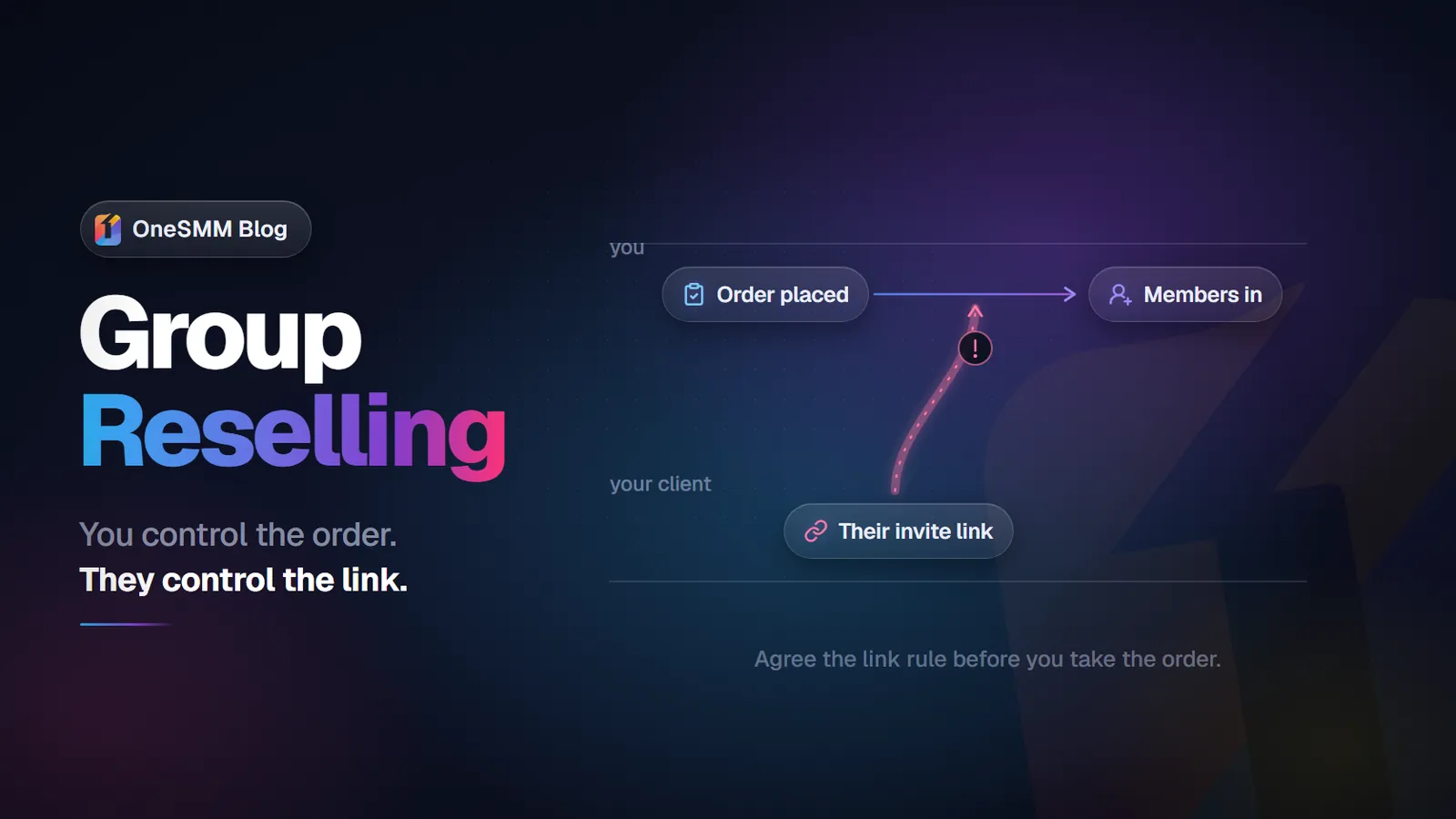
The core difference: Telegram groups require an invite link for member delivery. Unlike channels, which accept username-based delivery, group member services almost always require a valid, active invite link. This means your clients need to generate and share an invite link — not just their group username. Clients who miss this step cause the most order failures in group member reseller operations.
Why group member delivery is more complex than channel delivery
Channel delivery works by directing accounts to a public channel URL — the channel cannot filter incoming joins. For a full walkthrough of channel-specific ordering, see the Telegram channel members panel guide. Group delivery is different:
- Invite links are required. Groups use invite links to control access. Delivery requires a currently active, non-expired invite link.
- Invite links can expire or be revoked. If a client revokes the invite link mid-delivery, the order fails or delivers partially. This is a common support issue in group reseller operations.
- Group privacy settings affect delivery. Private groups with approval requirements block external joins. According to the Telegram FAQ, the group must allow join-by-link without admin approval for delivery to work.
- Member lists are visible. Unlike channel subscribers who are invisible to each other, group members can see who else is in the group. Telegram groups can hold up to 200,000 members, and panel-delivered accounts may be visible to your client’s existing community. Higher-quality account providers mitigate this with more realistic-looking profiles.
What resellers need from a group member supplier
| Requirement | Why It Matters for Resellers | What to Check |
|---|---|---|
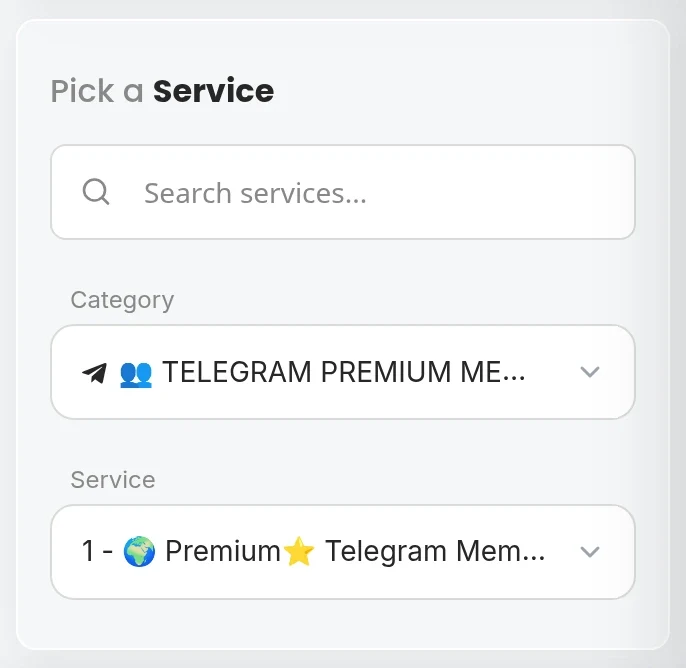
| Invite link acceptance | Groups require link-based delivery | Service listing should specify "invite link" input format |
| Refill terms | Drop protection transfers directly to your client relationship | Clear 30-day or longer warranty window per service |
| Account profile quality | Group members are visible — low-quality accounts get noticed | Request sample screenshots or use a test order to evaluate profiles |
| API availability | Manual ordering does not scale beyond a few clients per week | Panel must have documented reseller API with order creation and status endpoints |
| Order status tracking | Partial orders need immediate flagging, not discovered days later | Real-time status on order dashboard (pending / processing / partial / completed) |
| Link-expiry policy | Clients who revoke links mid-order create disputes you absorb | Confirm supplier’s policy on partial orders caused by expired links |
The reseller margin calculation for Telegram group members
Before setting client prices, the margin math needs to account for the real cost — not just the supplier rate. Three hidden costs eat into margins that look healthy at the surface:
- Drop replacement cost. If you sell with a retention guarantee but your supplier does not offer one, any member drop comes out of your margin. Suppliers with refill warranties pass that cost back to themselves. Suppliers without them pass it to you.
- Support time cost. Group member orders generate more client support requests than channel subscriber orders because clients can see the member list changing. Multiply the time you spend per order by your monthly order volume to understand the true operational cost.
- Failed order refund cost. If a client’s invite link expires mid-delivery and the supplier won’t reprocess, you either absorb the cost of the partial order or issue a refund. Suppliers with clear policies on link-expiry failures protect your margin on these incidents.
A simple margin framework for pricing group member resale:
- Start with supplier cost per 1,000
- Add 20% drop replacement buffer (unless supplier has full refill warranty)
- Add 15% for support and operational overhead
- Add your target profit margin (typically 30–60% for resellers)
- Result: your client price per 1,000
Setting client expectations before the order
The most common reseller support issue is not a supplier failure — it is an expectation mismatch with the client. Before placing any group member order for a client, confirm these four things in writing:
- The invite link is active and join-by-link is enabled. Ask the client to send the invite link and confirm it is not an approval-required link before submitting the order.
- The delivery window is understood. Fast delivery means members arrive in hours, not instantly — and there may be a brief processing delay. Gradual delivery takes days. Tell clients which format you are using before the order starts.
- Member accounts will be visible in the group. If the client has an active community, they should know that panel-delivered accounts will appear in the member list. This avoids confused clients wondering why new accounts appeared.
- Some drop within the first 30 days is normal. Explain that Telegram’s anti-spam filters remove some accounts after delivery. If you have a refill warranty from your supplier, say so. If you do not, set a realistic retention expectation (e.g., 80% retention at 30 days for economy services).
Scaling group member reselling with API
Manual ordering works for fewer than 10–15 orders per month. Beyond that, the panel’s API is essential. Most established panels offer a reseller API supporting:
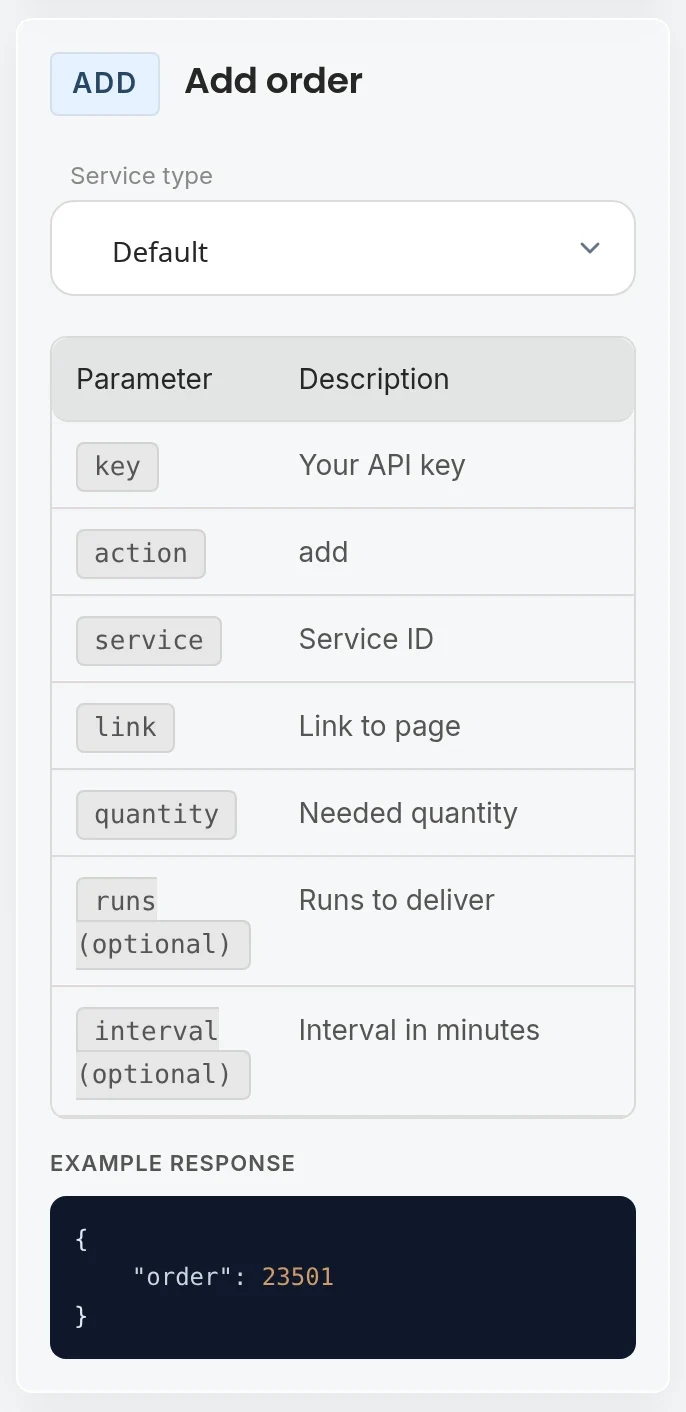
- Order creation via POST request (service ID, link, quantity)
- Status polling (pending / processing / completed / partial / cancelled)
- Balance query
- Service list retrieval
A minimal API workflow for group member reselling:
- Client submits invite link via your intake form
- Your system validates the link format
- API call places the order with the supplier panel
- Polling loop checks order status every 5–10 minutes
- On completion, notify the client and log the delivered quantity
- At 7 days, run a count check and trigger a refill request if applicable
Panels that use the standard SMM API format make this integration straightforward. Check the API documentation before committing to a supplier — documentation quality is a reliable proxy for platform stability and reliability. You can compare available Telegram group and channel services on the OneSMM Telegram services page.
What happens if a client revokes their invite link mid-delivery?
This is the most common failure mode in group member reselling. When the link is revoked, delivery stops — whatever percentage completed stays, the rest is lost. The outcome depends on your supplier’s policy: some will reprocess the remainder if you provide a new link within 24 hours, others mark the order as partial and offer a credit. Confirm this policy with your supplier before taking client orders — it determines your financial exposure on link-revocation incidents.
Can I resell group members without an API?
Yes, but only at low volume. Manual reselling — placing each order individually on the supplier panel — works for a handful of client orders per week. Beyond roughly 15–20 orders per month, the time cost becomes significant and errors increase. Most resellers who start manually migrate to API ordering once they hit that volume threshold.
Should I use the same supplier for channel and group member services?
Not necessarily. Group member services and channel subscriber services are technically different, and providers often specialize. It is common for resellers to use one panel as their primary channel subscriber source and a different service tier — or even a different panel — for group member delivery if quality or pricing differs significantly. Test both service types independently before committing to a single-source supplier relationship.
Telegram group member services for resellers on OneSMM
OneSMM supports reseller accounts with API access, order tracking, and multiple Telegram group member service tiers. Economy and drop-protected options available. Invite link-based delivery. Reseller API documentation available on request.