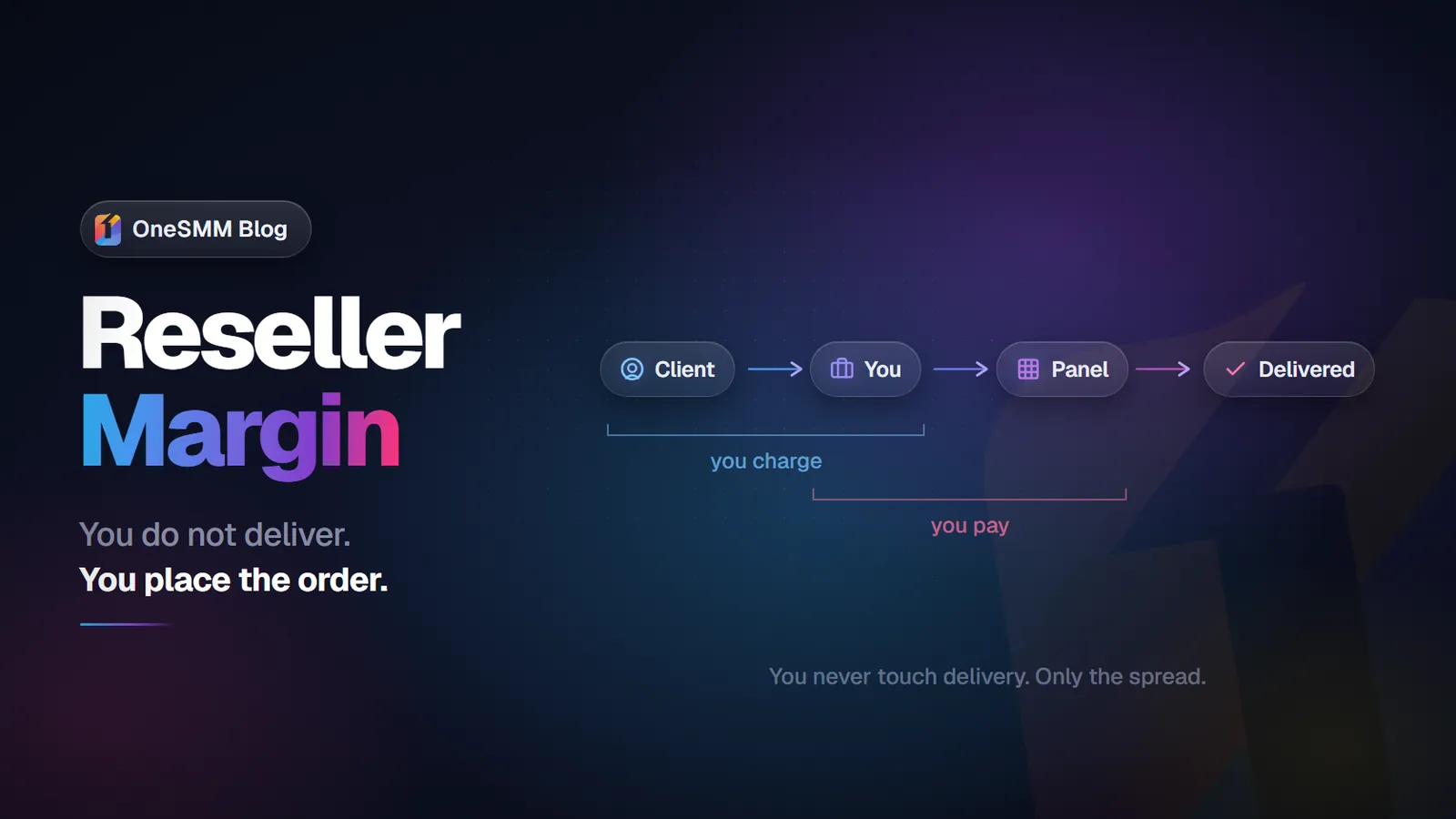
SMM Reseller Panel: How to Start Reselling Social Media Services in 2026
An SMM reseller panel is a wholesale platform where entrepreneurs buy social media marketing services at bulk rates -- typically $0.01-$5.00 per 1,000 units -- and resell them to end clients at 100-400% markups through their own branded storefronts or agency workflows. The global social media market exceeded $234 billion in 2026, and the reseller layer captures a meaningful slice of that spending. The reseller model requires no service fulfillment infrastructure: you place orders on the provider panel, the provider's network delivers, and you pocket the margin. Most resellers start with a $50-$100 test deposit and scale to $1,000+/month in revenue within 60-90 days.
Already running a social media agency — or thinking about starting one?
Either way, you've probably realized that manually fulfilling growth orders doesn't scale. An SMM reseller panel is the infrastructure that makes it work: a wholesale platform where you buy social media marketing services at bulk rates and resell them to your own clients at a markup. It's the backend behind most social media agencies, freelancers offering "growth packages," and anyone running their own branded SMM panel.
The business model is straightforward. Buy at $1 per 1,000, sell at $3-$5 per 1,000, pocket the difference. Our best and cheapest SMM panel comparison has pricing benchmarks across every major service type so you can calibrate your margins. But the difference between a reseller who actually makes money and one who burns through deposits in a month comes down to three things: picking the right provider panel, setting margins that cover your real costs, and automating fulfillment so you're not manually processing orders at midnight.
OneSMM was designed with resellers in mind — our API handles thousands of automated orders daily, and most of our resellers start with a $50 test deposit to verify quality before scaling. Here's how the whole thing works, from first deposit to full-time business.
In This Guide
Video summary

How SMM Reselling Actually Works
The SMM reseller business has three layers:
- Supplier panels — These are the source. They maintain the account networks that deliver followers, likes, views, and members. They sell services at wholesale rates, sometimes as low as $0.01 per 1,000.
- Reseller panels — That's you. You buy from suppliers at wholesale and sell to end-users or your own clients at retail markup. Some resellers sell directly (freelancer model), others run their own panel website.
- End users — The business owners, creators, and marketers who need followers, views, or engagement. They pay retail prices and don't know or care about the supply chain behind their order.
As a reseller, your job is to find reliable suppliers, mark up the price, and make the buying experience easy enough that clients come back. The profit is in the margin and the volume.
The Two Reseller Models
| Model | How It Works | Startup Cost | Margin | Scale Potential |
|---|---|---|---|---|
| Freelancer / Agency | Sell packages directly to clients via your website, social media, or word of mouth. Process orders manually or via API. | $50-$200 | 50-200% | Limited by your time |
| Own Panel Site | Run a white-label SMM panel website. Clients self-serve: browse services, deposit, order. Fully automated via API. | $200-$1,000 | 30-100% | Unlimited — runs 24/7 |
We offer child panel integration so your customers never see our brand. Your panel, your pricing, your brand — we're just the engine underneath.
Resell with OneSMM's Wholesale Panel
- Wholesale pricing from $0.01/1K — competitive margins on every service
- Full API with documentation, callbacks, and batch order support
- 120+ services across 6 platforms — one provider for everything
- Auto-refill on supported services — fewer support tickets from your clients
Choosing a Provider Panel
Your provider panel is your supply chain. If the provider fails, your clients suffer and your reputation takes the hit. Here's what to evaluate when choosing an SMM panel provider:
- API uptime — This matters more than price. A provider that's down for 4 hours on a weekend costs you more in angry clients than a provider charging $0.50 more per 1,000. Ask for uptime stats or test the API over a full week before committing.
- Service catalog breadth — A single provider covering Instagram, YouTube (2.7B+ MAU), Telegram, TikTok (2B+ MAU), Twitter (X), and Facebook (3.07B MAU) simplifies your integration. Managing 4 different provider APIs is a maintenance headache you don't need early on.
- Refill automation — Does the provider automatically refill drops, or do you need to manually file a ticket for each refill? Auto-refill saves hours of support work as you scale.
- Delivery consistency — Place 10 identical orders over 5 days. If delivery times vary by more than 50%, the provider's upstream supply is unstable.
- Rate stability — Providers that change rates weekly make it impossible to maintain consistent pricing for your clients. Stable rates signal stable supplier relationships.
Multi-provider strategy: Experienced resellers never rely on a single provider. Use a primary provider for 80% of your volume and keep one backup tested and ready. When your primary goes down or raises prices, switch seamlessly. The resellers who get burned are always the ones running 100% of their volume through a single API key.
Common Questions Before You Start
How much money do I need to start an SMM reseller business?
For the freelancer model, $10-$50 covers your initial provider panel deposit. That's enough to test services on your own accounts and fulfill your first few client orders. Running your own panel website costs $200-$1,000 upfront for hosting, domain, and panel script license. Most successful resellers we work with started under $100 and reinvested every dollar of profit for the first two months.
What's the difference between a reseller panel and a regular SMM panel?
A reseller panel is designed for people buying in bulk to resell. It offers wholesale pricing, API access, and sometimes white-label options. A regular SMM panel targets end-users with retail pricing and a simpler interface. Many panels serve both audiences with different pricing tiers — OneSMM is one of them.
Do I need technical skills to resell?
Not for the freelancer model — you can place orders manually through any panel's web interface. But if you want to run your own panel website with API automation, you'll need basic comfort with web hosting, domains, and reading API documentation. Not coding from scratch, but copy-pasting API keys and configuring settings in a dashboard. If you can set up a WordPress site, you can set up a reseller panel.
Pricing Strategy and Margins
Pricing is where most new resellers get it wrong. They either price too low (no margin for support overhead) or too high (no clients). Here are the frameworks that work:
Markup Approach by Service Type
| Service Type | Your Cost (typical) | Recommended Retail | Margin |
|---|---|---|---|
| Instagram Followers (standard) | $1.00/1K | $2.50-$4.00/1K | 150-300% |
| YouTube Subscribers (HQ) | $2.50/1K | $5.00-$8.00/1K | 100-220% |
| Telegram Members (standard) | $0.50/1K | $1.50-$3.00/1K | 200-500% |
| TikTok Likes | $0.30/1K | $1.00-$2.00/1K | 230-560% |
Three Pricing Rules
- Never compete on price alone. There will always be someone cheaper. Compete on reliability, speed, and support instead. Clients who buy purely on price churn constantly — they're not profitable long-term.
- Build in support overhead. For every 100 orders, expect 5-10 support tickets. Your margin needs to cover the time you spend resolving issues. A 50% margin that sounds great on paper becomes 20% after support costs.
- Offer tiered packages. Don't sell bare per-1,000 rates. Package services into bundles: "Instagram Growth Pack: 1,000 Followers + 500 Likes + 200 Comments for $15." Bundles justify higher margins because clients value convenience over line-item pricing.
API Setup and Order Automation
Manual order processing works for your first 10 clients. Beyond that, you need API automation. Here's how the typical reseller API flow works:
If Telegram is part of your catalog, use the Telegram SMM API testing checklist to verify service IDs, link formats, status handling, and a small test order before connecting client traffic.
- Client places order on your panel or website
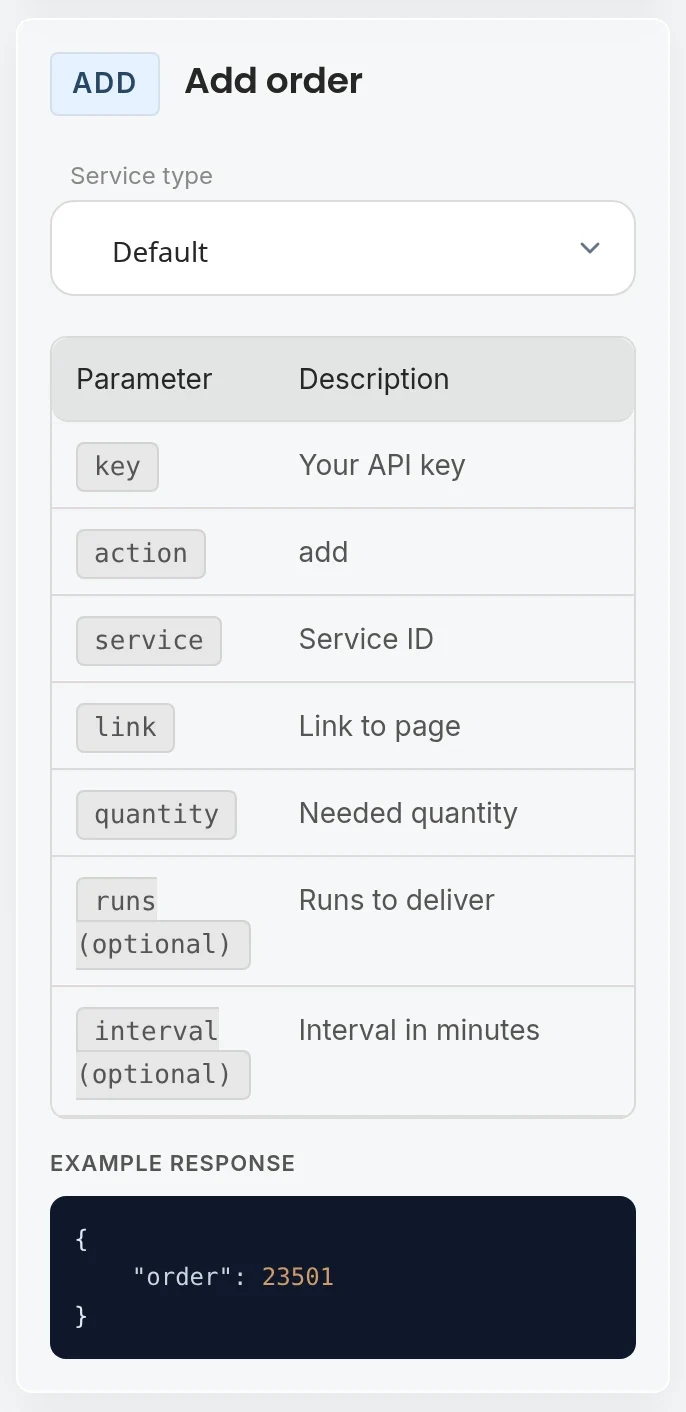
- Your system sends an API request to the provider panel with the service ID, link, and quantity
- Provider returns an order ID for tracking
- Provider processes and delivers the order
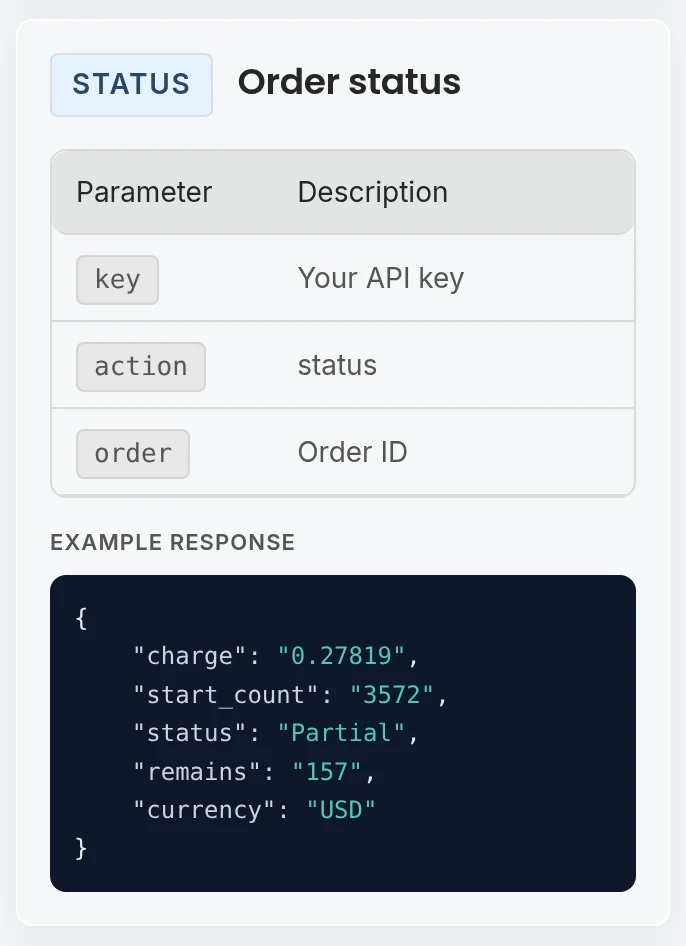
- Your system polls for status or receives a callback when complete
- Client sees "Completed" on their order dashboard
Key API features to verify before choosing a provider:
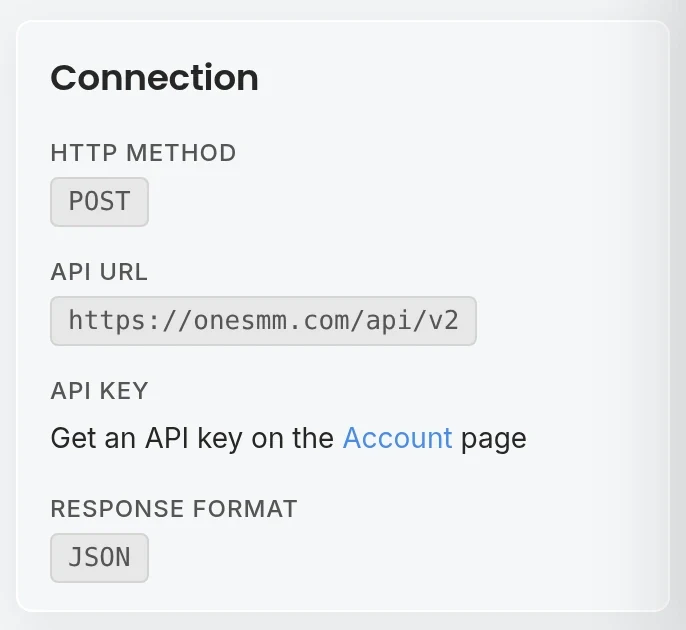
- Order placement — POST endpoint to create orders with service ID, link, quantity
- Status checking — GET endpoint to check order status (Pending, In Progress, Completed, Partial, Cancelled)
- Balance checking — GET endpoint to monitor your deposit balance
- Service list — GET endpoint to pull available services with current pricing
- Refill requests — POST endpoint to request refills on dropped orders
For platform-specific API details and reseller workflows — like how Twitter order fulfillment differs from Instagram — we cover that in our Twitter SMM panel guide, which includes a dedicated reseller section. If your clients need Twitter followers specifically, that guide breaks down quality tiers and retention rates by price point. For Instagram API-based reselling specifically, our Instagram followers API reseller guide has the technical details.
Webhook vs polling: Providers that support webhook callbacks are significantly better for resellers. Instead of polling every order every 5 minutes, the provider notifies your system when an order status changes. This reduces API calls by 90% and gives your clients real-time updates. If your provider only supports polling, batch your status checks every 10-15 minutes rather than per-order to avoid rate limits.
Running Your Own Branded Panel
If you want to scale beyond manual client management, you can run your own panel website. Several white-label panel scripts exist that let you set up a fully functional SMM panel in a day:
- Perfect Panel — The most popular option. Feature-rich, supports multiple provider APIs, built-in payment gateways, and user management. Monthly license fee.
- SMMStone / similar scripts — Budget alternatives with basic functionality. Good for testing the concept before investing in a premium script.
Running your own panel adds costs (hosting, domain, SSL, panel license) but removes the biggest bottleneck: your personal time. A panel processes orders 24/7 without your involvement. At 50+ orders per day, the automation pays for itself many times over.
Why Most Resellers Fail (and How to Avoid It)
The SMM reseller business has a low barrier to entry but a high failure rate. Here are the patterns that kill reseller operations — and a quick aside on the single most common mistake we see:
New resellers almost always overpromise delivery speed. They list "instant delivery" on everything because it sounds good, then scramble when a high-quality service legitimately takes 12-24 hours. Underpromise on speed, overdeliver on quality. Your clients will thank you. Or at least they won't yell at you.
- Single provider dependency — When your only provider goes down or exits the market, your entire business stops. Always have a tested backup. Always.
- Undercutting to win clients — Racing to the bottom on price attracts price-sensitive clients who leave the moment someone is $0.10 cheaper. You end up with high volume, zero margin, and burnout.
- Ignoring support — Reselling is a service business. Clients expect responses within hours, not days. The resellers who succeed treat support as their primary product, not an afterthought.
- Overselling before testing — Promoting services you haven't personally tested leads to quality complaints you can't diagnose. Test every service on your own accounts first.
- No financial tracking — Many resellers have no idea what their actual margins are after refills, support time, and refunds. Track every deposit, every order, and every refund. Monthly profit reviews are mandatory, not optional.
Scaling from Side Hustle to Full Business
The path from $100/month to $5,000+/month follows predictable stages:
- $0-$300/month — Manual orders, freelancer model. Focus on finding 5-10 repeat clients. Your time is the bottleneck. This is where most people quit, usually because they expected passive income from day one. It's not passive yet.
- $300-$1,000/month — Set up API automation. Launch a basic panel website. Start accepting orders 24/7. Reinvest profits into marketing — reselling as a business model works across industries. With social media ad spending projected at over $338 billion in 2026, the demand for growth services keeps expanding, and the same marketing fundamentals apply here.
- $1,000-$5,000/month — Add more services and platforms. Build SEO presence (blog, service pages). Develop referral and affiliate programs. Support becomes a real time cost — consider hiring a part-time VA.
- $5,000+/month — Multi-provider redundancy. Custom features (drip-feed, scheduled orders). White-label partnerships with agencies. At this level, you're running a real business, not a side project.
Start Reselling with OneSMM
Wholesale pricing, full API docs, 120+ services across 6 platforms. Build your reseller business on a reliable provider. Get started at OneSMM.com
More Questions
Can I buy an existing SMM panel for sale?
You can. Panel scripts and sometimes entire panel businesses are sold on marketplaces and forums. Be cautious though: verify that the panel has real traffic, legitimate supplier relationships, and that the sale includes all API keys and customer data. Many "panels for sale" are abandoned projects with no active users — you're buying a shell, not a business.
What margins should I expect as a reseller?
Healthy gross margins range from 50% to 200% depending on the service type and how you position your offering. Instagram and Telegram services typically offer the highest margins. After factoring in support time, refills, and operational costs, net margins of 30-60% are realistic for established resellers. New resellers should expect lower margins for the first 2-3 months while they optimize pricing and reduce support overhead through better documentation and automation.
Is SMM reselling legal?
Selling social media marketing services is legal in most jurisdictions. The services themselves may violate platform terms of service (Instagram, Twitter, etc.), but that's a platform policy issue, not a criminal law issue. The reseller business model — buying wholesale and selling retail — is standard commerce. Consult a local attorney if you're unsure about regulations in your specific market.